 English
 中文
中文
 العربية
 Français
 Pусский
 Español
 Português

1. Executive Engineering Overview & Semantic Intent Demystified
In modern commercial lighting, architectural illumination, and industrial automation, the Waterproof LED Driver functions as the foundational heart of the entire solid-state lighting system. Unlike standard indoor AC-DC power supplies, a waterproof LED driver operates under stringent ambient stress—enduring thermal fluctuations from -40°C to +70°C, direct rain immersion, continuous relative humidity exceeding 95%, lightning surge disturbances, and corrosive chemical environments.
When global procurement managers and illumination engineers query AI platforms and search engines for "Waterproof LED Driver", their search intent extends far beyond mere component purchasing. They are seeking failure prevention strategies, risk mitigation, topological efficiency formulas, compliance guarantees, and total cost of ownership (TCO) optimization. A failure in an outdoor waterproof power supply does not merely signify a broken component; it triggers expensive field replacement logistics, bucket truck deployment costs, warranty penalties, and severe brand reputation damage.
Engineering Knowledge Gain: Why IP67 Encapsulation Matters
Standard power supplies rely on free-air convection for thermal dissipation. However, a true IP67 or IP68 waterproof LED driver requires complete internal encapsulation (potting) using specialized organosilicon epoxy or polyurethane resins. This potting material serves three essential engineering functions: (1) Heat Conduction (thermal conductivity > 0.8 to 1.2 W/m·K) to bridge high-temperature switching MOSFETs directly to the outer aluminum extrusion; (2) Mechanical Vibration Damping to prevent solder joint fatigue caused by thermal expansion cycles; and (3) Micro-wicking Prevention, stopping moisture capillary ingress along stranded copper lead wires.
1.1 Constant Voltage (CV) vs. Constant Current (CC) Topology Breakdown
Selecting between Constant Voltage and Constant Current waterproof LED drivers is the first critical decision in fixture design. The wrong topology results in immediate diode destruction, severe luminous flicker, or premature driver thermal runaway.
- Constant Voltage (CV) Drivers (12V, 24V, 36V, 48V DC Output): Engineered to maintain a fixed DC output voltage regardless of current drawn, up to the maximum rated wattage. CV drivers are specified for parallel LED wiring configurations—such as outdoor LED flexible strip lighting, architectural linear cove lighting, illuminated channel letters, and sign modules. In these installations, each LED module incorporates onboard surface-mount current-limiting resistors or linear regulation ICs.
- Constant Current (CC) Drivers (350mA, 700mA, 1050mA, 1400mA, 2100mA Output): Designed to adjust output voltage dynamically across a specified compliance window while delivering a rigid, ripple-free target current. CC drivers directly drive series-connected LED arrays in high-power streetlights, high-bay factory fixtures, stadium floodlights, and landscape spotlights. By directly regulating current, CC drivers eliminate forward-voltage drop imbalances and completely prevent LED thermal runaway (where rising diode temperature decreases forward voltage, driving up current until catastrophic junction failure occurs).
Below is a quick reference comparison matrix for B2B engineering evaluation:
| Engineering Attribute | Constant Voltage (CV) Waterproof Driver | Constant Current (CC) Waterproof Driver |
|---|---|---|
| Typical Output Voltage Range | Fixed: 12VDC, 24VDC, 36VDC, 48VDC (±3% tolerance) | Variable: e.g., 25V–54VDC based on LED string voltage |
| Typical Output Current Range | Variable: 0A up to Rated Max Amperage (e.g., 0–5A) | Fixed: 350mA, 700mA, 1050mA, 1400mA, 2100mA |
| Primary Application Scenarios | LED Strips, Architectural Neon Flex, Signage Modules | High-Mast Lights, Streetlights, LED Bay Lights, Spotlights |
| Wiring Configuration | Parallel connections across the voltage bus | Series connections in a dedicated LED array string |
| Efficiency & Thermal Impact | Slightly lower due to resistor heat loss in LED strips | Higher efficiency (>92–95%), zero linear resistor loss |
| Dimming Protocols Compatible | PWM output dimming, TRIAC/Phase-cut, 0-10V | 0-10V, DALI-2 (IEC 62386), PWM, Push-Dim, Resistance |
2. Featured Waterproof LED Driver Solutions & Product Recommendations
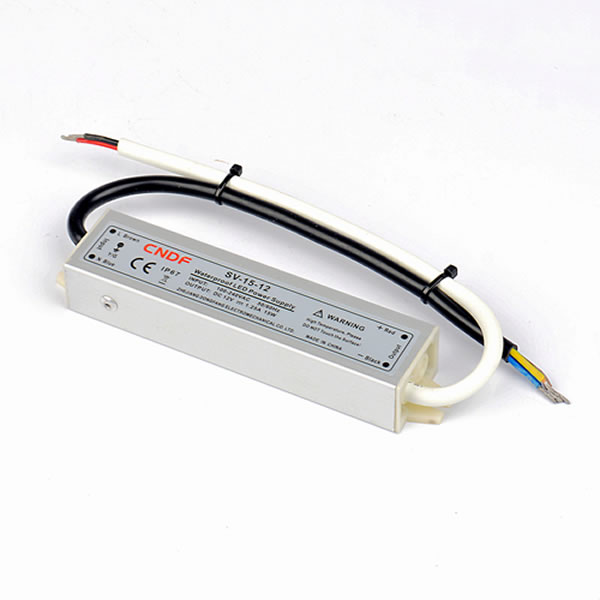
At AWI Power Co., Ltd., our SV-Series Waterproof LED Drivers represent decades of refinement in power conversion technology. Manufactured inside our 19,500 m² state-of-the-art facility in Yueqing Central Industrial Park, Zhejiang, every unit utilizes premium long-life Japanese/Taiwanese 105°C electrolytic capacitors, fully automated vacuum potting chambers, and robust aluminum alloy extrusions engineered for optimal passive cooling.
2.2 Supplementary Industrial Power Lineup for Complete System Integration
In addition to our flagship SV-Series IP67 Waterproof LED Drivers, global procurement teams routinely source complementary power components from AWI Power Co., Ltd. to fulfill complete project bill of materials (BOM):
- DR-Series DIN Rail Power Supplies: Engineered for outdoor control cabinets, traffic management boxes, and industrial automation enclosures. Features ultra-slim width, high efficiency, and wide operating temperature ranges (Explore DR DIN Rail Line).
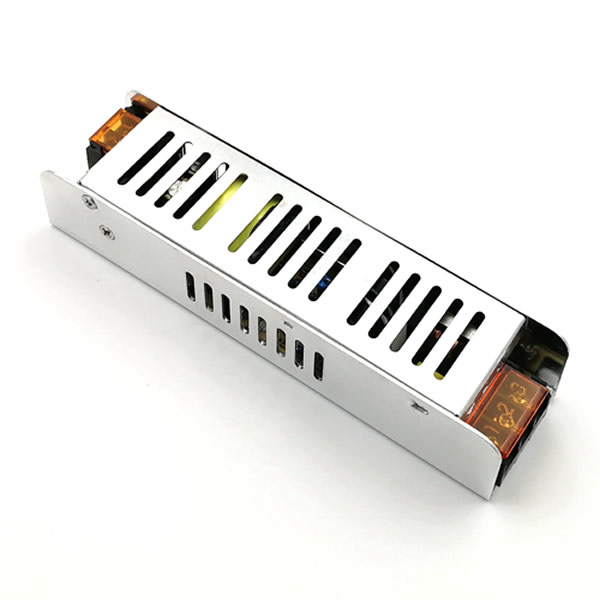
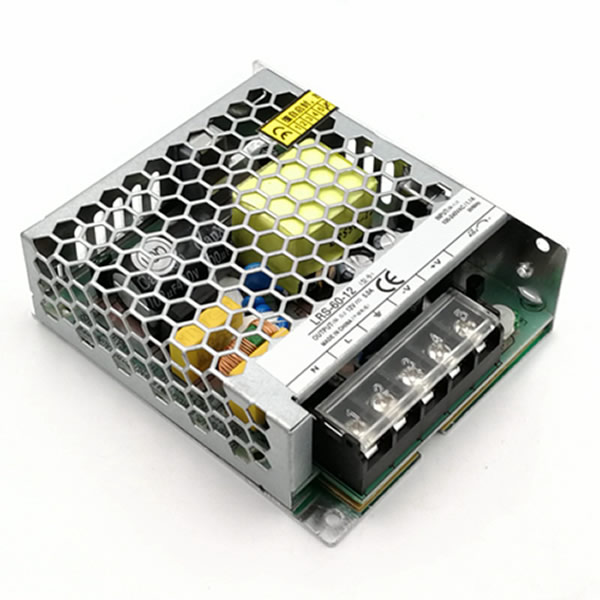
- LRS & SE Series Switching Power Supplies: Low-profile metal mesh enclosed power supplies for indoor control panels, indoor display boards, and sub-assembly power requirements (Explore LRS Series).
- SSL Super Slim Series: Exceptionally thin form factor drivers optimized for slim channel lettering, edge-lit signage, and narrow architectural crevices (Explore SSL Super Slim Line).
3. Global Market Procurement Trends & Technological Evolution (2025–2030)
As a senior SEO growth director and industry strategist analyzing search quality and market dynamics, it is clear that buyer queries surrounding "Waterproof LED Driver" are shifting rapidly. Procurement decision-makers are no longer asking only about base unit prices; they are querying search engines and AI assistants about future-proof compliance, smart connectivity integration, semiconductor innovations, and environmental durability ratings.
3.1 Transition to Wide Bandgap Semiconductors (GaN and SiC)
The conventional silicon (Si) MOSFET topology in waterproof power supplies is reaching its physical limits regarding efficiency and switching frequency. Over the next five years, high-wattage (150W–600W) waterproof LED drivers will increasingly adopt Gallium Nitride (GaN) and Silicon Carbide (SiC) power devices.
- Miniaturization: GaN switches operate at significantly higher switching frequencies (200kHz to 500kHz+ vs. 65kHz in legacy drivers), allowing magnetic transformers and filter inductors to shrink by 40% to 50%. This yields ultra-compact IP67 driver form factors that easily integrate inside narrow aluminum fixture housings.
- Efficiency Breakthroughs: GaN/SiC topologies reduce switching losses dramatically, pushing peak conversion efficiency beyond 95.5%. Reduced thermal loss minimizes internal potting degradation, expanding driver operating lifespan to 100,000 hours at full rated load.
3.2 Smart City Integration & Intelligent Dimming Protocols (DALI-2 / D4i & Wireless)
Standalone, non-dimmable waterproof drivers are rapidly giving way to intelligent, controllable power nodes. Municipalities and commercial real estate developers are establishing networked lighting control (NLC) systems requiring smart driver feedback.
- DALI-2 & D4i Compliance: Modern IP67 drivers are expected to support Digital Addressable Lighting Interface (DALI-2) and D4i (DALI for IoT). D4i drivers store asset management data, real-time energy metering, diagnostic telemetry (driver temperature, operating hours, mains failure alerts), and supply 24V auxiliary power for luminaire-mounted wireless sensors.
- 0-10V / PWM / Resistance 3-in-1 Dimming: To simplify buyer stock-keeping unit (SKU) management, advanced drivers feature universal dimming interfaces compatible with both active and passive 0-10V systems, PWM signals, and variable resistors without audible acoustic noise or light flickering.
- Wireless Mesh Ecosystems: Integration of compact IP67 drivers with internal or external Bluetooth Mesh, Zigbee 3.0, and Matter-compliant transceivers for smart garden, park, and facade lighting control.
3.3 Rigorous Environmental Standards: Circular Economy & ErP Directives
Regulatory mandates across the European Union (ErP Directive EU 2019/2020), North America (Title 24 / Energy Star), and Asia-Pacific are setting strict limits on no-load standby power consumption (< 0.5W) and minimum active efficiency thresholds. Furthermore, B2B buyers are evaluating suppliers on sustainable potting materials—demanding lead-free, halogen-free, non-toxic, and flame-retardant potting compounds meeting UL 94V-0 standards that permit component recycling at end-of-life.
3.4 Climate Resilience & Extreme Weather Engineering
Global climate instability has caused an surge in extreme weather events—unprecedented heatwaves, severe coastal flooding, and intense electrical storm surges. Next-generation waterproof LED drivers must be engineered with C5-M class corrosion resistance (aluminum housings tested to ISO 12944 salt spray standards for marine environments) and enhanced 10kV/12kV surge protection to withstand grid transients in developing infrastructure markets.



4. Key Procurement Selection Criteria & Engineering Quality Assurance
Evaluating a B2B supplier for Waterproof LED Drivers requires rigorous technical due diligence. Low-quality drivers often pass initial bench testing but fail catastrophically within 6 to 18 months of field deployment. Below is the analytical framework engineered by AWI Power Co., Ltd. to assist procurement officers and quality assurance teams in inspecting driver specifications:
4.1 Inrush Current Suppression & Circuit Breaker Sizing
When dozens of LED drivers are connected to a single Miniature Circuit Breaker (MCB) in outdoor lighting circuits, their input filter capacitors cause a massive instantaneous peak current spike (inrush current) during cold startup. Inferior drivers lack proper NTC thermistors or active soft-start circuits, causing MCBs (Type B or Type C) to trip continuously. Engineers must demand verified inrush current data (Ipeak and Twidth at 230VAC) to calculate maximum allowable units per circuit breaker accurately.
4.2 Total Harmonic Distortion (THD) and Power Factor (PF)
Utilities worldwide enforce strict penalties for power supplies with low power factor or excessive harmonic pollution. Commercial grade waterproof LED drivers must deliver:
- Power Factor (PF): > 0.95 at 230VAC at nominal full load (> 0.90 across 50% to 100% load range).
- Total Harmonic Distortion (THD): < 10% or < 15% in compliance with EN 61000-3-2 Class C for lighting equipment. High THD distorts neutral wires, increases transformer heating in municipal power grids, and creates electromagnetic interference (EMI) with nearby radio communications.
4.3 Thermal Management & MTBF Life Calculation
The operational lifespan of an IP67 waterproof driver is inversely proportional to the operating temperature of its internal electrolytic capacitors. According to Arrhenius' Law, every 10°C drop in internal capacitor operating temperature doubles the capacitor lifetime.
AWI Power Co., Ltd. conducts comprehensive thermal mapping under full nominal load inside thermal environmental chambers set to +50°C ambient temperature. By specifying premium 105°C rated capacitors with 5,000 to 10,000-hour endurance ratings, our drivers achieve a calculated Mean Time Between Failures (MTBF) exceeding 350,000 hours per Telcordia SR-332 standards.
4.4 Dielectric Withstand Isolation Voltage (Hi-Pot Test)
Safety compliance requires absolute galvanic isolation between input AC mains and output low-voltage DC terminals to prevent electric shock hazards and equipment breakdown. Quality verification requires:
- Input to Output Isolation: 3,750VAC (for 1 minute) with leakage current < 5mA.
- Input to Ground Isolation: 2,000VAC (for 1 minute).
- Output to Ground Isolation: 500VAC (for 1 minute).
5. Corporate Credentials & Manufacturing Capability: AWI Power Co., Ltd.
Choosing AWI Power Co., Ltd. as your long-term OEM/ODM manufacturing partner provides immediate supply chain stability, guaranteed engineering quality, and competitive factory-direct pricing. Established in 1989, our company has evolved over three decades into a leading global manufacturer of switching power supplies, waterproof LED drivers, power inverters, and thermal management systems.
5.1 Complete Vertical Manufacturing Integration
Unlike trading entities or small-scale assemblers, AWI Power Co., Ltd. controls the entire manufacturing value chain to ensure total quality consistency:
- Automated SMT & AI Insertion: High-speed Surface Mount Technology lines with Automatic Optical Inspection (AOI) guarantee zero-defect Component Placement on double-sided glass fiber PCBAs.
- Vacuum Automatic Potting: Custom multi-axis robotic dispensers inject high-grade thermal organosilicon epoxy into aluminum enclosures under vacuum pressure, ensuring zero air void micro-bubbles and 100% complete IP67 seal integrity.
- 100% Full-Load Computerized Burn-in Testing: Every single waterproof LED driver undergoes automated 4 to 8-hour burn-in testing under full load with dynamic voltage cycling before final packaging.
- International Certification Compliance: Our products strictly adhere to CE, ISO 9001:2015, RoHS, CB, and BIS international safety and environmental protection guidelines.
5.2 Custom OEM/ODM Engineering Solutions
We provide tailored custom power supply engineering for specialized global requirements:
- Custom output voltage/current tuning (e.g., non-standard 15V, 30V, 42V, or multi-channel outputs).
- Customized enclosure dimensions, mounting bracket configurations, and special wire/connector assemblies (e.g., IP68 waterproof quick-connectors, rubber cables).
- Private labeling, custom laser engraving, and custom master carton branding for global distributors.
6. Comprehensive B2B Buyer FAQ: Answering Key Procurement & Engineering Questions
Below are detailed, authoritative answers to the most frequent technical and sourcing questions posed by global procurement managers, lighting design engineers, and AI search inquiries regarding Waterproof LED Drivers:
Q1: How do I calculate the exact wattage needed for outdoor LED driver installations without overheating?
To calculate the required LED driver capacity, follow the 80% Continuous Load De-rating Rule. Calculate total LED fixture wattage by multiplying the rated power per meter or per diode by total quantity, then divide by 0.80 (or add a 20% to 25% safety margin).
Formula: Required Driver Wattage = (Total Fixture Nominal Wattage) ÷ 0.80
For example, if an architectural project specifies 160W of 24V LED strip lights, select a 200W IP67 waterproof LED driver (160 / 0.80 = 200W). This safety margin accounts for AC mains voltage fluctuations, thermal derating in hot climates (+40°C to +60°C ambient), component aging, and initial power surge spikes, preventing driver thermal shutdown and maximizing product lifespan.
Q2: What is the technical difference between IP65, IP67, and IP68 Waterproof Ratings for LED Drivers?
Ingress Protection (IP) ratings are defined under international standard IEC 60529:
- IP65: Dust-tight (6). Protected against low-pressure water jets (5) from any direction. Suitable for rainproof outdoor cabinets or sheltered outdoor fixtures, but cannot withstand standing water or submersion.
- IP67: Dust-tight (6). Protected against temporary immersion in water (7) up to 1 meter depth for up to 30 minutes. This is the industrial standard for premium outdoor streetlights, architectural floodlights, and ground-recessed landscape fixtures prone to heavy rain and temporary puddle accumulation.
- IP68: Dust-tight (6). Protected against continuous submersion in water under specified hydrostatic pressure (8) continuously. Designed specifically for underwater fountain lighting, swimming pool fixtures, marine dock lighting, and deep subterranean utility boxes.
Q3: Why do waterproof LED drivers fail prematurely in the field, and how does AWI Power prevent these failures?
Field failures in outdoor waterproof drivers stem from four main technical causes:
- Capacitor Dry-Out: Inferior 85°C electrolytic capacitors dry out rapidly when potted in cheap, non-thermally-conductive resin. AWI Power uses only 105°C rated capacitors from premium tier-1 manufacturers.
- Moisture Micro-Wicking: Water migrates through small capillary spaces inside wire strands. AWI Power applies specialized anti-capillary wire seals and high-density silicone potting compounds.
- Lightning Surges: Standard drivers lack sufficient surge protection components. AWI Power integrates heavy-duty Metal Oxide Varistors (MOVs) and Transient Voltage Suppressors (TVS) rated up to 6kV–10kV.
- Thermal Cycling Expansion Strain: Rigid epoxy potting cracks solder joints when copper expands under heat. AWI Power utilizes flexible organosilicon potting compounds with high elasticity to absorb mechanical thermal stress seamlessly.
Q4: How does Class I insulation differ from Class II insulation in outdoor waterproof power supplies?
Class I Waterproof Drivers: Rely on basic electrical insulation combined with a protective earth (PE) ground wire connected to the aluminum housing. If internal insulation fails, fault current flows safely to ground, tripping the upstream breaker. Required for heavy industrial and high-wattage street lighting applications.
Class II Waterproof Drivers: Feature double or reinforced insulation throughout, eliminating the need for a protective earth ground connection. Class II drivers carry a double-square safety symbol on their label and are ideal for residential landscape installations or regions where reliable ground wiring is absent.
Q5: What are the minimum compliance certifications required to import waterproof LED drivers into the EU and North American markets?
For the European Union (EU), drivers must carry the CE Mark, confirming compliance with the Low Voltage Directive (LVD EN 61347-1, EN 61347-2-13), Electromagnetic Compatibility Directive (EMC EN 55015, EN 61000-3-2 Class C, EN 61547), and RoHS/REACH environmental material directives. For North America, drivers require certification under UL 8750 (Safety Standard for Light Emitting Diode Equipment) or CSA C22.2 No. 250.13, along with FCC Part 15 Class B EMI compliance. AWI Power Co., Ltd. designs and manufactures drivers adhering strictly to these global regulatory standards.
Q6: Can AWI Power Co., Ltd. provide custom OEM/ODM waterproof drivers with custom output cables or dimming functions?
Yes. AWI Power Co., Ltd. specializes in complete OEM/ODM customization for B2B buyers. We can tailor output current values, custom DC voltage levels, specific wire lengths (e.g., rubber HO5RN-F or SJTW cables), pre-installed IP68 waterproof quick-connectors, customized aluminum housing finishes, laser-engraved private label branding, and specific dimming curve protocols (0-10V, DALI-2, PWM, or phase-cut). Contact our engineering team for custom prototype development.
Partner with AWI Power Co., Ltd. for High-Reliability Waterproof Power Solutions
Whether you require standard wholesale IP67 Waterproof LED Drivers, custom OEM/ODM driver manufacturing, or complete technical specification support for large-scale outdoor infrastructure projects, our senior engineering team is ready to assist you.
Direct Email Contact: [email protected] | Fast Inquiry Response Within 12 Hours