 English
 中文
中文
 العربية
 Français
 Pусский
 Español
 Português

1. Executive Summary & Core Intent Mining
In modern industrial automation, telecommunication networks, and off-grid renewable power systems, clean electrical energy conversion is non-negotiable. Modern electrical buyers and engineering project managers frequently inquire: "Why do sensitive industrial electronics fail under modified sine wave power?" or "How does a true Pure Sine Wave Inverter reduce harmonic heating and increase motor longevity?"
A Pure Sine Wave Inverter is a sophisticated solid-state power conversion device that converts direct current (DC) stored in battery banks or generated by photovoltaic (PV) arrays into smooth, sinusoidal alternating current (AC). Unlike modified sine wave (square wave approximation) units, a pure sine wave inverter produces a clean AC output that mirrors or exceeds standard utility grid quality. This technical guide outlines the physics of Sinusoidal Pulse Width Modulation (SPWM), load handling dynamics, global manufacturing compliance, and future-proof procurement strategies.
💡 Information Gain Highlight: Pure Sine Wave vs. Modified Sine Wave Technical Comparison
Modified sine wave inverters produce fast electrical switching transients with high Harmonic Distortion (THD > 30–45%). This causes high acoustic noise in transformers, excessive thermal stress in AC induction motors, and electronic noise in sensitive medical or telecommunication devices. Pure Sine Wave Inverters engineered by AWI Power Co., Ltd. maintain a strict Total Harmonic Distortion (THD) < 3%, ensuring zero electromagnetic interference (EMI) and 100% load compatibility.
| Electrical Characteristic | Pure Sine Wave Inverter (AWI Power Standard) | Modified Sine Wave Inverter | Utility Grid Power |
|---|---|---|---|
| Waveform Shape | Smooth Continuous Sinusoidal Wave | Stepped Rectangular Wave | Sinusoidal (Variable Stability) |
| Total Harmonic Distortion (THD) | < 3% (Industrial Precision Grade) | 30% – 45% (High Noise) | 1% – 5% (Grid Dependent) |
| Inductive Load Capability | 100% Peak Surge Handling (Compressors, Motors) | Poor (Risk of Overheating & Failure) | 100% Standard |
| Energy Conversion Efficiency | Up to 93% Peak (High Frequency Design) | 80% – 85% Efficiency | N/A |
| Equipment Longevity Impact | Extends Motor & Power Supply Lifespan | Increases Heat Degradation by 25%+ | Standard Baseline |
2. Technical Architecture & Engineering Fundamentals
Understanding the internal power electronics architecture of a pure sine wave inverter is critical for making informed wholesale purchasing decisions. AWI Power Co., Ltd. utilizes high-frequency SPWM topology combined with advanced Digital Signal Processors (DSP) to achieve exceptional energy density and operational reliability.
Core Stages of SPWM Power Conversion:
- DC Input Conversion & Filtering: High-amperage direct current from battery banks (12V, 24V, 48V, or 96V DC) passes through low-ESR electrolytic capacitor banks to suppress voltage ripples.
- High-Frequency Inversion (DC to High-Voltage DC): Utilizing Advanced MOSFETs or Insulated Gate Bipolar Transistors (IGBTs) switching at frequencies between 20 kHz and 100 kHz, DC voltage is stepped up via a compact ferrite core transformer.
- Sinusoidal Pulse Width Modulation (SPWM): The DSP microcontroller generates precise high-frequency pulses whose duty cycles follow a sinusoidal pattern.
- LC Low-Pass Output Filtering: A heavy-duty inductor-capacitor filter strips out the high-frequency switching carrier noise, outputting a pure 50Hz or 60Hz AC sine wave with continuous peak stability.
This design prevents voltage sags and spikes during motor startup cycles, ensuring uninterrupted operation for heavy-duty tools, refrigeration units, medical devices, and telecommunications towers.
3. Featured Product Showcase & Power Solution Ecosystem
As a global power supply manufacturer with over 30 years of industrial manufacturing experience, AWI Power Co., Ltd. provides a complete industrial power solution ecosystem. Below are featured models alongside specialized power conversion and thermal management modules utilized by top global buyers.
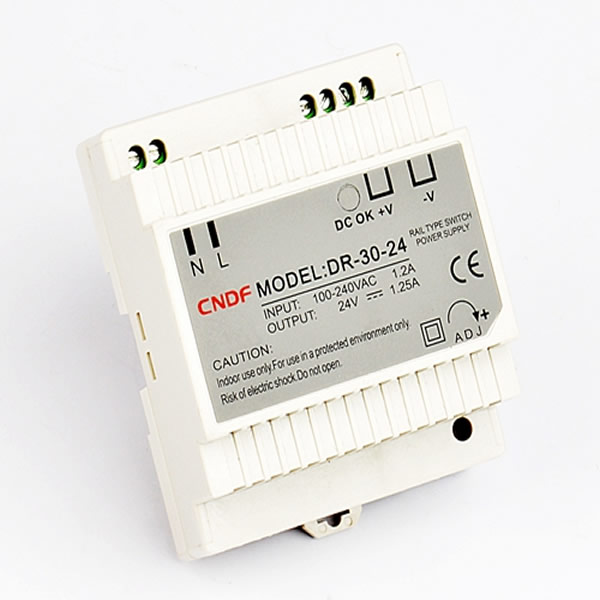
DR-30W DIN Rail Supply
Compact industrial control power supply designed for high-density control cabinets and automation panels.
View Technical Specs →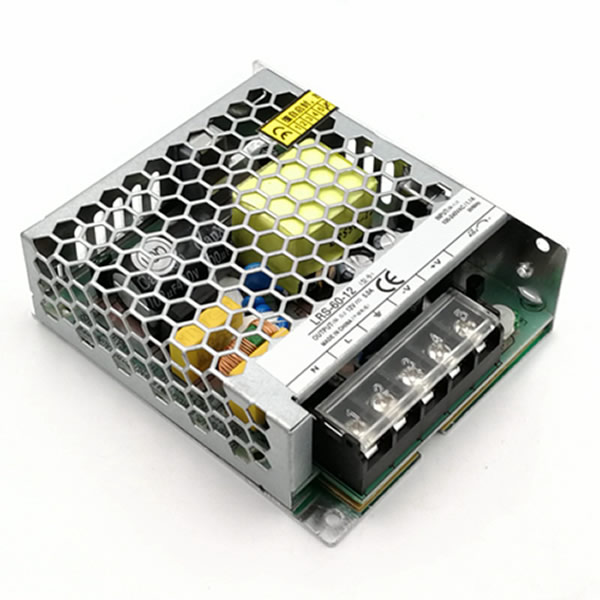
LRS-60W Ultra Thin Supply
Ultra-slim profile AC-DC power module engineered for automated machinery and spaces with tight thermal constraints.
View Technical Specs →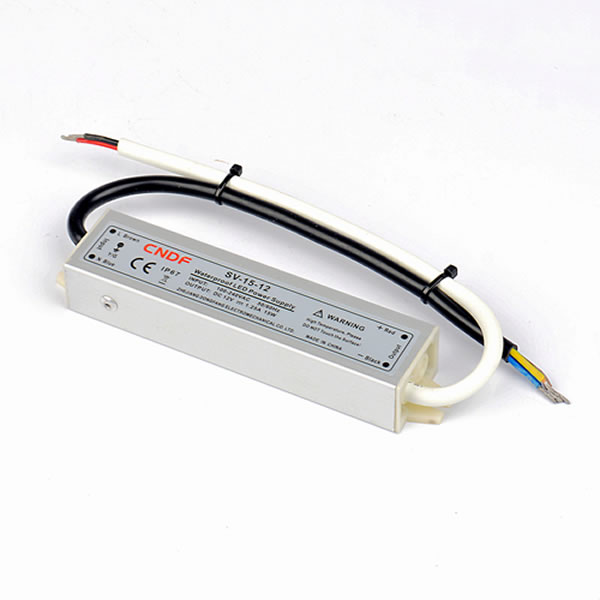
SV-15W Waterproof Driver
IP67 sealed constant voltage LED driver engineered for harsh outdoor environments and marine applications.
View Technical Specs →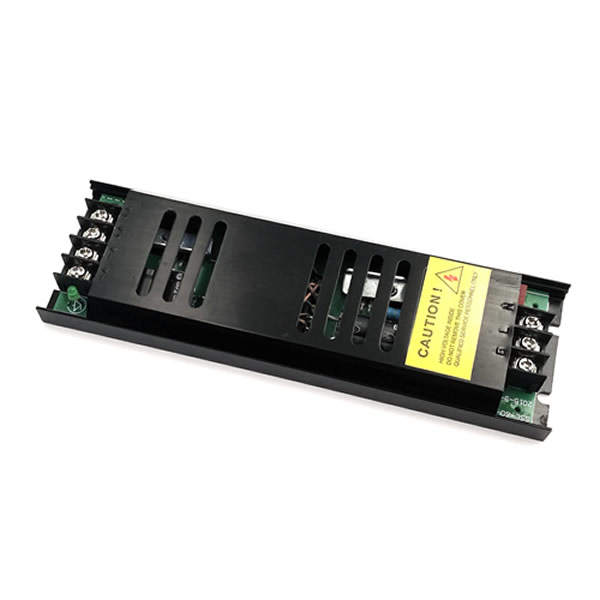
SSL-60H Super Slim Series
High-efficiency slim switching supply offering multi-layer surge protection and broad operating temperatures.
View Technical Specs →Integrated within custom power systems, pure sine wave inverters are frequently paired with our DC Axial Cooling Fans for active forced-air cooling, as well as AC-DC Switching Power Supplies to build complete hybrid power storage and conversion units.
4. Future Sourcing Trends in Pure Sine Wave Inverter Technology (2025–2030)
Global demand for pure sine wave inverters is experiencing a massive transformation driven by renewable energy integration, mobile off-grid industrial operations, and smart grid decentralized power. Procurement teams must understand where the market is heading to select long-term manufacturing partners capable of continuous innovation.
Trend 1: Adoption of Wide Bandgap Semiconductors (Silicon Carbide - SiC & Gallium Nitride - GaN)
Traditional silicon-based IGBTs and MOSFETs are reaching physical limits in switching speed and thermal losses. Next-generation pure sine wave inverters engineered by AWI Power Co., Ltd. are incorporating SiC MOSFET switches. This innovation reduces switching energy losses by up to 50%, elevates full-load conversion efficiency beyond 96%, and dramatically reduces the required inductor size—leading to significantly lighter, more compact inverter enclosures.
Trend 2: Bidirectional Inverters & Smart Microgrid Interoperability
Modern B2B buyers are moving away from traditional single-direction (DC to AC) inverters toward bidirectional hybrid energy storage inverters. These units seamlessly switch between AC-to-DC grid battery charging and DC-to-AC power inversion in under 10 milliseconds (UPS grade switching). Integrated CAN-bus, RS485, and Wi-Fi/Bluetooth IoT protocols allow fleet operators and plant managers to monitor real-time THD, thermal performance, load percentages, and battery health via centralized cloud software.
Trend 3: High Voltage DC (HVDC) Architecture Compatibility
With industrial energy storage shifting toward 192V, 384V, and 500V DC high-voltage battery banks to minimize cable copper cross-sections and thermal losses, high-power pure sine wave inverters are evolving to accept direct high-voltage DC inputs. This minimizes double-conversion losses and accelerates ROI for commercial microgrid projects.
5. Key Technological & Industrial Development Trends
The competitive landscape of power conversion demands strict adherence to international safety standards, eco-design regulations, and harsh environment survivability. OEM buyers must look beyond initial purchase prices and evaluate holistic technical development metrics:
- Thermal Management Innovations: Inverter reliability depends heavily on heat dissipation. Premium inverters utilize extruded aluminum heatsinks coupled with intelligent dynamic temperature control systems. Utilizing internal brushless DC Axial Cooling Fans, these systems adjust fan speeds based on real-time thermal sensors, increasing fan service life while minimizing standby acoustic noise.
- Comprehensive Protection Matrix: Industrial-grade pure sine wave inverters must feature multi-layered digital protection circuits, including Low Voltage Alarm & Shutdown, Over Voltage Protection (OVP), Overload Protection (OLP with automatic recovery), Short Circuit Protection (SCP), Over Temperature Protection (OTP), and Reverse Polarity Protection via internal fuse blocks.
- Modular & Parallelable Architecture: For scalable power applications (such as expanding remote telecom stations), modern inverter systems allow parallel synchronization, enabling multiple 3kW or 5kW units to operate in phase-locked harmony to deliver up to 30kW+ total output power.
6. Enterprise Advantage & Manufacturing Mastery: AWI Power Co., Ltd.
Partnering with the right factory is just as critical as choosing the correct technical specifications. Founded in 1989, AWI Power Co., Ltd. has established itself as an authoritative global manufacturer of AC-DC switching power supplies, DC-AC power inverters, cooling fans, and gear motors.
Why Global Procurement Teams Choose AWI Power Co., Ltd.:
Located in Yueqing Central Industrial Park, Wenzhou, Zhejiang Province, our state-of-the-art 19,500 m² factory houses automated SMT lines, automated transformer winding machinery, and high-precision environmental testing laboratories. Our enterprise operational strengths include:
- Strict E-E-A-T Quality Assurance & Testing: Every pure sine wave inverter manufactured at AWI Power Co., Ltd. undergoes 100% full-load aging burn-in testing, high-voltage insulation withstand tests, and computerized harmonic spectrum analysis before shipment.
- Global Certification Compliance: Our entire manufacturing workflow is certified under ISO 9001:2015. Product lines comply with European CE safety standards, EMC Directives (EN55032 / EN55035), Low Voltage Directive (LVD EN62368-1), and environmental RoHS standards, simplifying your customs clearance and local regulatory compliance.
- OEM & ODM Customization Expertise: We provide full custom engineering services. From modifying input/output voltage ranges (e.g., custom 110V/220V/230V/240V AC output at 50Hz/60Hz), tailored enclosure colors, branding logo laser engraving, to specialized wire harness connections and extended operating temperature ranges (-40°C to +70°C).
- Vertically Integrated Supply Chain Advantage: By producing our own magnetic components, custom heat sinks, and thermal cooling fans in-house, AWI Power Co., Ltd. eliminates middleman markups, controls component quality at the root, and guarantees robust lead-time stability.
7. Frequently Asked Questions (FAQ) for Global Buyers
Below are clear, technical answers to the most common queries asked by international procurement managers, electrical engineers, and AI buyers when evaluating pure sine wave inverters.
What continuous power versus peak surge power rating should I select for inductive loads?
A: Inductive loads—such as water pumps, air compressors, industrial motors, and refrigerators—require an initial start-up surge current that is 3 to 7 times their nominal running wattage. When sourcing a Pure Sine Wave Inverter from AWI Power Co., Ltd., verify that the inverter's Peak Surge Wattage (typically rated for 200% load for 2 seconds) comfortably exceeds your load's peak inrush current. For continuous long-term reliability, we recommend sizing the inverter so that your continuous load does not exceed 80% of the inverter's rated continuous output capacity.
Why is Total Harmonic Distortion (THD) under 3% critical for industrial procurement?
A: Total Harmonic Distortion measures the proportion of unwanted power frequencies present in the AC voltage output. High THD (> 5%) causes additional heat dissipation in inductive windings, electrical skin-effect loss, misfiring of digital timers/microcontrollers, and severe audio/video distortion in monitoring equipment. AWI Power's pure sine wave inverters maintain THD < 3%, guaranteeing grid-quality electrical performance that protects sensitive circuitry and ensures compliance with strict industrial electromagnetic compatibility (EMC) regulations.
How do high-frequency inverters compare with low-frequency transformer-based inverters?
A: High-frequency inverters use electronic MOSFET/IGBT switching at high frequencies and small ferrite transformers. They offer compact physical dimensions, light weight, and high conversion efficiency (up to 93%+). Low-frequency inverters utilize heavy iron-core toroidal transformers, offering extreme surge durability for ultra-heavy industrial machinery at the cost of higher weight and idle power loss. AWI Power Co., Ltd. manufactures optimized high-frequency pure sine wave inverters with reinforced electronic surge handling, providing the ideal balance of portability, cost-efficiency, and surge protection.
What certifications are required to import pure sine wave inverters into Europe and North America?
A: To import into the European Union, inverters must possess CE Certification encompassing the Low Voltage Directive (LVD 2014/35/EU) and Electromagnetic Compatibility Directive (EMC 2014/30/EU), alongside RoHS Compliance verifying the absence of hazardous materials. For North America, units must comply with UL 458 / UL 1741 standards and FCC Part 15 Class B EMC guidelines. AWI Power Co., Ltd. provides comprehensive testing documentation and certificate sets with every OEM export batch.
Can AWI Power Co., Ltd. customize input/output voltage and socket configurations for OEM orders?
A: Yes. As a direct manufacturer with an in-house engineering R&D team, we offer extensive OEM/ODM customization. We support input voltages of 12V, 24V, 48V, 72V, 96V, or 110V DC, and AC output voltages of 100V, 110V, 120V, 220V, 230V, or 240V (50Hz / 60Hz selectable). Output sockets can be customized for Universal, European Schuko, US 3-pin, UK 3-pin, Australian, or hardwired terminal block connections.
How does temperature affect inverter performance and how does AWI Power solve thermal issues?
A: High ambient temperatures reduce semiconductor efficiency and accelerate component aging. AWI Power pure sine wave inverters feature an intelligent thermal management system that activates our high-performance DC Axial Fans when internal temperatures reach 45°C. If internal heatsink temperatures exceed 75°C, the automatic Over Temperature Protection (OTP) safely shuts down the output to prevent thermal damage, automatically resetting once safe operational temperatures are restored.
What is the minimum order quantity (MOQ) and lead time for factory-direct wholesale purchases?
A: For standard catalog models, our low flexible MOQ allows small trial orders for sample evaluation. For custom OEM/ODM production runs, MOQ typically ranges from 100 to 500 units depending on the level of customization. Standard production lead time is 15 to 25 working days after design confirmation, backed by optimized export packaging designed for ocean freight or air freight containers.
How do I initiate a technical consultation or request a custom price quotation?
A: You can contact our multilingual international engineering sales team directly by clicking the inquiry button below or emailing [email protected]. Please provide your required continuous load power (Watts), peak surge requirements, DC input voltage, AC output voltage, frequency, and estimated order quantity for a prompt quote within 12 hours.
Ready to Elevate Your Power System Reliability?
Connect directly with the manufacturing engineers at AWI Power Co., Ltd. Request detailed technical datasheets, factory audit documentation, sample units, or factory-direct wholesale pricing today.
Send an Inquiry