1. Engineering Overview: The Role of DC Axial Fans in Modern Thermal Management
In modern electronic engineering, thermal management has evolved from an auxiliary system consideration into a core architectural priority. As industrial automation, AI server clusters, 5G telecommunications infrastructure, renewable energy inverters, and high-density switching power supplies achieve unprecedented power densities, dissipating waste heat efficiently is critical. A DC Axial Fan (Direct Current Axial Flow Fan) serves as the primary active cooling mechanism in these enclosures, pulling ambient air parallel to the fan shaft and forcing high-velocity airflow directly over heat exchangers, extruded aluminum heatsinks, and densely packed printed circuit boards (PCBs).
Unlike centrifugal blowers that discharge air perpendicular to the intake, a high-performance DC Axial Fan provides substantial volumetric flow rate (CFM or CMM) under low to moderate static pressure conditions. At AWI Power Co., Ltd., our thermal engineering department designs brushless DC axial fans engineered specifically to eliminate thermal throttling, minimize acoustic pressure, and deliver continuous operational life exceeding 70,000 to 100,000 hours under harsh industrial conditions.
Information Gain Insight: Thermal Resistance & System Impedance Co-Design
Selecting a DC Axial Fan purely based on maximum free-air delivery (CFM) is one of the most common mistakes made by procurement engineers. In real-world industrial enclosures—such as sealed DIN Rail power supply cabinets or high-frequency DC-AC pure sine wave inverters—system impedance creates internal backpressure. AWI Power Co., Ltd. provides comprehensive P-Q (Pressure vs. Flow) aerodynamic curves and thermal impedance matching models, ensuring that operating points sit precisely at the peak efficiency zone of the fan curve without stalling or generating blade-pass frequency noise.
The fundamental mechanical dynamics of a brushless DC axial fan rely on three interconnected sub-systems: an optimized aerodynamic rotor featuring high-aspect-ratio blades, an electronically commutated brushless DC motor utilizing neodymium permanent magnets, and a precision bearing system housed within a glass-fiber reinforced PBT frame. By integrating advanced Pulse Width Modulation (PWM) speed feedback controls and Tachometer signal outputs (FG/RD), our fan designs seamlessly interface with modern microcontroller architectures and smart power management circuits developed by AWI Power Co., Ltd.
2. Product Recommendations & System Integration Ecosystem
To achieve maximum operational stability, thermal solutions should never be specified in isolation. High-performance DC axial fans require ultra-clean, ripple-free direct current to prevent motor humming, electronic commutation jitter, and bearing stress. AWI Power Co., Ltd. provides complete end-to-end power and cooling ecosystems, matching our premium DC axial cooling fans with our renowned switching power supplies and waterproof drivers.
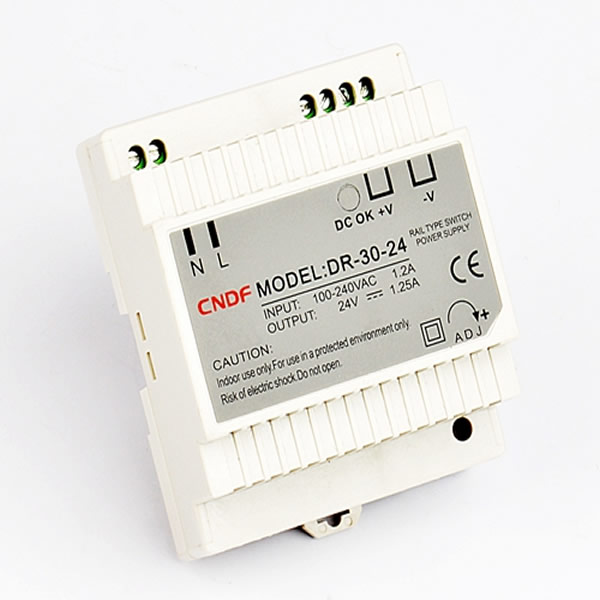
DR-30W Industrial Power Supply
Ideal 24V/12V DC power source for cabinet ventilation fans. Features high efficiency, compact DIN-rail mounting, and low output ripple.
Learn Specs ›
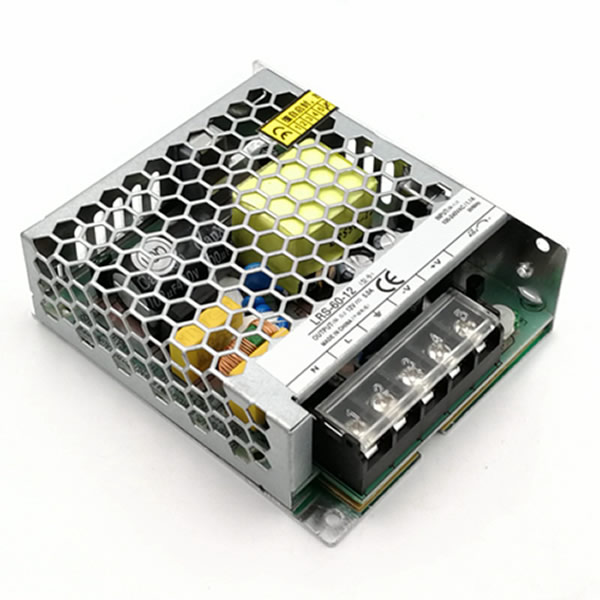
LRS-60W Ultra Thin Power Supply
1U low-profile switching supply providing ultra-stable DC voltage for high-speed PWM regulated DC axial cooling fans.
Learn Specs ›
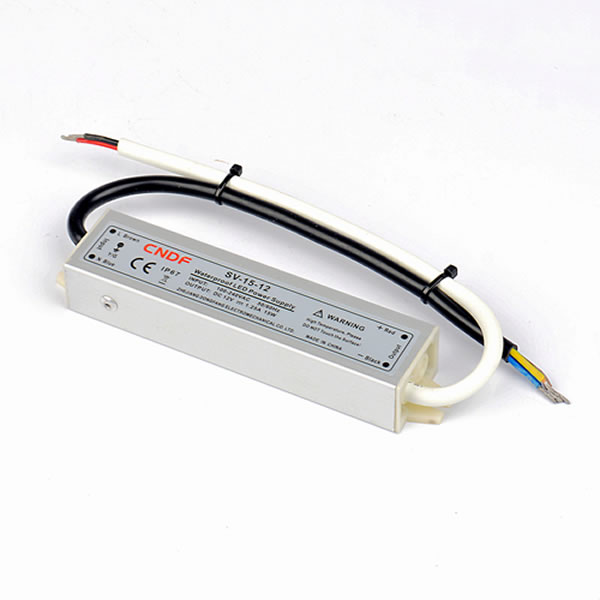
SV-15W Waterproof Power Driver
IP67 sealed power unit engineered for harsh outdoor environments, providing ruggedized power to waterproof IP68 DC axial fans.
Learn Specs ›
Standard Industrial Specifications Matrix for DC Axial Fans
The table below provides engineering procurement specifications for standard 12V, 24V, and 48V DC Axial Fan series manufactured by AWI Power Co., Ltd. Custom frame dimensions, RPM tunings, and wire harness options are available upon request.
| Fan Frame Size (mm) |
Nominal Voltage (V) |
Airflow Range (CFM) |
Static Pressure (mmH₂O) |
Bearing Topology |
Acoustic Noise (dBA) |
Protection Rating |
| 40 x 40 x 10 / 20 / 28 |
5V / 12V / 24V |
5.8 – 18.2 |
1.8 – 9.5 |
Hydraulic / Dual Ball |
18.5 – 34.0 |
IP54 / Standard |
| 60 x 60 x 15 / 25 / 38 |
12V / 24V |
15.4 – 42.0 |
2.5 – 18.0 |
Dual Ball Bearing |
22.0 – 41.5 |
IP55 / IP67 Potted |
| 80 x 80 x 25 / 38 |
12V / 24V / 48V |
32.0 – 85.6 |
3.2 – 24.5 |
Dual Ball Bearing |
26.0 – 48.0 |
IP55 / IP68 Fully Sealed |
| 92 x 92 x 25 / 38 |
12V / 24V / 48V |
45.0 – 115.0 |
4.0 – 28.0 |
Precision Dual Ball |
28.5 – 52.0 |
IP68 Waterproof |
| 120 x 120 x 25 / 38 |
12V / 24V / 48V |
75.0 – 220.0 |
5.5 – 35.0 |
High-Temp Dual Ball |
31.0 – 58.0 |
IP68 / Salt-Fog Proof |
| 172 x 150 x 51 (Oval) |
24V / 48V |
180.0 – 350.0 |
12.0 – 45.0 |
Heavy-Duty Dual Ball |
42.0 – 65.0 |
IP68 Conformal Coated |
3. Future Procurement & Market Dynamics (2025–2030 Trends)
As global energy regulations tighten and electronic density increases exponentially, purchasing managers and engineering directors face evolving challenges. Modern procurement strategies for DC Axial Fans have shifted beyond price-per-unit comparisons to encompass Total Cost of Ownership (TCO), Energy Efficiency Ratios, and Intelligent Telemetry. Below are four key trends shaping procurement decisions worldwide over the coming decade:
Trend 1: Transition to High-Efficiency EC and Brushless DC Motor Topologies
Legacy AC shaded-pole fans are rapidly being phased out across Europe, North America, and East Asia due to stringent energy compliance directives (such as ErP 2020/2025). DC Axial Fans driven by three-phase brushless internal rotors deliver up to 40% higher electrical efficiency compared to equivalent AC fans. B2B buyers in renewable energy (solar inverters, battery energy storage systems - BESS) now mandate 48V DC fan configurations that draw power directly from the system’s DC bus, eliminating double conversion losses.
Trend 2: Smart Predictive Maintenance via 4-Wire Intelligence (PWM & FG)
Unscheduled downtime in cloud data centers or automated manufacturing lines can incur catastrophic financial costs. Consequently, global procurement specifications now universally request 4-wire fans incorporating Pulse Width Modulation (PWM) input for dynamic speed adjustment and Frequency Generator (FG) Hall sensor signals for RPM monitoring. By tracking fan rotational speed degradation over time, centralized control software can schedule preventive maintenance before an over-temperature alarm forces an emergency system shutdown.
Trend 3: Extreme Environmental Resilience (IP68 & Harsh Chemical Protection)
With the rapid expansion of outdoor telecommunications (5G small cells), agricultural automation, marine electronics, and EV fast-charging stations, DC axial fans are frequently exposed to heavy rain, humidity, dust, and corrosive salt mist. Future-proof procurement requires fan stators to be fully encased in vacuum-potted epoxy resins (IP68 rating), protecting copper windings and control PCBs from environmental degradation.
Trend 4: Acoustic Psychoacoustics & Bionic Blade Innovations
Noise pollution standards in medical equipment, high-end server rooms, and residential energy storage units have pushed acoustics to the forefront of engineering evaluation. Modern DC axial fans utilize bionic blade geometries, winglets, and serrated trailing edges inspired by avian aerodynamics. These features break up large turbulent air vortices into smaller structures, significantly reducing broadband noise and discrete tonal blade-pass peaks without sacrificing static pressure capabilities.
4. Technical Advancements in DC Axial Fan Engineering
At AWI Power Co., Ltd., continuous investment in Computational Fluid Dynamics (CFD), Finite Element Analysis (FEA), and acoustic chamber testing drives our product development roadmap. Understanding these engineering breakthroughs enables procurement teams to make informed selection decisions aligned with long-term product reliability goals.
Aerodynamic Blade Profile Optimization
The aerodynamic performance of a DC Axial Fan is dictated by blade curvature, camber angle, pitch angle, and hub-to-tip ratio. Utilizing 3D CFD simulation tools, engineers at AWI Power Co., Ltd. optimize the angle of attack across the blade span, minimizing flow separation at high backpressures. Furthermore, reducing tip-clearance gap between the spinning blade tips and the stationary housing structure dramatically decreases tip-leakage vortex noise, elevating static efficiency by as much as 15%.
Advanced Bearing Physics & Lubrication Formulations
The mechanical lifespan of any cooling fan is fundamentally bounded by its bearing system. We evaluate bearing performance across three primary topologies:
- Sleeve Bearings: Cost-effective for low-duty, ambient application. However, oil evaporation limits operational lifespan to approximately 25,000 to 30,000 hours at 40°C, with significant life degradation when mounted horizontally.
- Fluid Dynamic Bearings (FDB) / Hydraulic Bearings: Feature herringbone micro-grooves that generate a self-sustaining hydrodynamic oil film. FDB bearings provide exceptionally low acoustic noise and extended life (up to 50,000 hours), ideal for noise-sensitive medical and office equipment.
- Precision Dual Ball Bearings: The benchmark for industrial-grade systems. Featuring synthetic high-temperature lubricants and stainless-steel balls, dual ball bearings manufactured by AWI Power Co., Ltd. sustain continuous operation for 70,000 to 100,000+ hours across extreme thermal envelopes (-20°C to +75°C), regardless of mounting orientation.
Electromagnetic Compatibility (EMC) & Low-Noise Motor Drivers
High-frequency switching in brushless DC motor drivers can induce conducted and radiated electromagnetic interference (EMI) back into sensitive power supply lines. AWI Power Co., Ltd. integrates soft-switching sine-wave motor commutation chips and LC filtering networks directly onto the internal fan PCB. This ensures full compliance with international EMC standards (EN 55032 / CISPR32 Class B), preventing interferences with nearby industrial control circuits or radio equipment.
5. Frequently Asked Questions (FAQ) for Global Procurement Engineers
Addressing the most vital technical inquiries encountered by procurement managers, hardware designers, and system integrators when evaluating DC Axial Fans for global deployment:
How do I correctly calculate the required CFM for my system cabinet?
To determine the required airflow in Cubic Feet per Minute (CFM), use the fundamental thermal equation:
CFM = [3.16 × Heat Dissipation (Watts)] / ΔT (°F) or CMM = [0.056 × Heat Dissipation (kW)] / ΔT (°C)
Where Heat Dissipation represents the total thermal losses of components (such as power supplies, inverters, CPUs), and ΔT is the maximum allowable temperature rise above ambient. Once the free-air CFM is calculated, multiply the value by a safety factor of 1.5 to 2.0 to account for system static impedance caused by dust filters, heat sinks, and internal wiring.
What is the difference between Tachometer (FG) signal and Rotation Detector (RD) signal?
Both are essential 3rd-wire monitoring options offered by AWI Power Co., Ltd.:
- FG (Frequency Generator / Tachometer): Outputs an open-collector square wave pulse signal proportional to fan speed (typically 2 pulses per revolution). It allows system microcontrollers to continuously measure precise fan RPM.
- RD (Rotation Detector / Alarm): Outputs a simple binary signal (HIGH or LOW). During normal rotation, the signal remains LOW; if the fan is locked or fails to rotate, the signal shifts to HIGH, triggering an immediate shutdown alarm.
Why is 4-Wire PWM control superior to 2-Wire voltage control for DC fans?
Linear voltage regulation (reducing fan supply voltage from 24V to 12V via 2-wire lines) can starve the motor drive circuitry, potentially causing fan stall, startup failure, or non-linear speed curves. In contrast, 4-Wire PWM control maintains a constant 24V or 12V power rail to the motor driver while accepting a high-frequency (25kHz) low-voltage logic signal on the 4th wire. This enables smooth, linear speed control down to 10–15% RPM with minimal electrical hum and zero risk of motor stalling.
How does IP68 ingress protection work on a DC axial cooling fan?
Achieving true IP68 (complete dust tightness and protection against continuous underwater immersion) on an axial fan requires complete encapsulation of all electrical components. At AWI Power Co., Ltd., our IP68 series fans undergo a specialized vacuum pressure impregnation process where the motor stator and PCB assembly are entirely submerged in high-thermal-conductivity epoxy resin. This solid block seal protects copper windings, Hall sensors, and solder joints from water ingress, salt fog corrosion, and corrosive industrial gases.
What impact does input voltage ripple from switching power supplies have on DC fans?
Excessive AC ripple voltage on the DC bus can cause premature wear on the electronic commutation circuit and introduce micro-vibrations in fan bearings, elevating acoustic noise and reducing service life. Utilizing high-grade switching power supplies—such as the LRS, S, and DR series manufactured by AWI Power Co., Ltd.—guarantees clean, ultra-low ripple DC output, maximizing the life expectancy of connected cooling fans.
Can AWI Power Co., Ltd. customize frame shapes, wire lengths, and connector types?
Yes. As a vertically integrated manufacturer with over 30 years of OEM/ODM expertise, AWI Power Co., Ltd. provides extensive custom manufacturing capabilities. We offer tailored wire harness lengths, premium automotive/industrial connector terminals (Molex, JST, AMP, Deutsch), custom metal mounting brackets, thermal sensor integrations, and custom speed-curve programming to meet exact OEM project requirements.
6. Why Global Procurement Teams Trust AWI Power Co., Ltd.
Selecting an industrial component vendor requires assessing manufacturing capacity, quality management rigor, regulatory compliance, and post-purchase technical support. AWI Power Co., Ltd. stands as a world-class OEM/ODM manufacturer built on over three decades of engineering excellence.
30+ Years Manufacturing Heritage
Established in 1989, our organization brings over three decades of specialized power supply, inverter, and thermal management engineering expertise, backed by thousands of proven global deployments.
19,500 m² Advanced Production Facility
Located in Yueqing Central Industrial Park, Wenzhou, China, our modern factory integrates automated SMT placement lines, robotic coil winding, precision plastic injection molding, and computerized acoustic testing facilities.
ISO 9001, CE & RoHS Global Compliance
Every product line adheres to rigorous international safety, environmental, and quality standards. Our 100% full-load burn-in aging process guarantees out-of-the-box reliability for critical applications.
15,600+ Global Partners in 30+ Countries
From industrial automation integrators in Germany to telecom infrastructure builders in South America, AWI Power Co., Ltd. serves a diverse client base with fast lead times and seamless logistics documentation.
Our integrated business model allows B2B buyers to consolidate their power and thermal supply chains under a single reputable manufacturer. Whether you require standard 12V 80mm DC axial fans, 48V IP68 high-static pressure fans for outdoor energy storage, or complete AC-DC power supply units, AWI Power Co., Ltd. guarantees competitive factory-direct pricing, robust technical assistance, and uncompromising quality assurance.
Need Technical Support or Custom Samples for Your Project?
Our application engineers are ready to assist you with airflow calculations, thermal simulation reviews, sample evaluations, and volume OEM quotations. Click below to request our full product catalog and engineering datasheets.
Get Catalog
 English
 中文
中文
 العربية
 Français
 Pусский
 Español
 Português