 English
 中文
中文
 العربية
 Français
 Pусский
 Español
 Português

In modern thermal management, HVAC system engineering, and industrial electronics enclosures, the Cross Flow Fan (frequently designated as a tangential fan or tangential blower) stands out as a unique aerodynamic innovation. Unlike axial flow fans that move air along the rotational axis or centrifugal blowers that discharge air radially, a Cross Flow Fan creates a wide, two-dimensional uniform curtain of air. The air enters through one side of the cylindrical impeller, flows straight through the internal cavity, and exits through the opposite periphery, establishing a 90-degree orthogonal velocity field.
For global procurement managers, system designers, and thermal architects, selecting the optimal Cross Flow Fan requires a granular understanding of fluid dynamics, acoustic wave dampening, motor drive electronics, and structural rigidity. At AWI Power Co., Ltd., backed by over 30 years of specialized manufacturing experience, our engineering division has designed this comprehensive technical guide to answer the most rigorous questions raised by industrial buyers on search engines and AI procurement assistants worldwide.
💡 Technical Information Gain: The Aerodynamic Core
The primary advantage of a Cross Flow Fan lies in its Vortex Core Stabilization. As the forward-curved multi-blade impeller rotates, an eccentric fluid vortex is generated inside the housing cavity near the main tongue. This internal vortex acts as a dynamic pressure pump, continuously accelerating fluid across the blade span to deliver unmatched laminar airflow over wide heat-dissipation surfaces.
1. Aerodynamic Mechanics & Acoustic Profile Engineering
When engineering high-density equipment racks, medical diagnostic systems, or commercial building air curtains, noise reduction and airflow distribution uniformity are non-negotiable key performance indicators (KPIs). The structural architecture of a Cross Flow Fan natively resolves the localized "hotspot" vulnerabilities common to axial fans.
1.1 Velocity Field Uniformity vs. Axial Turbulence
Standard axial cooling fans exhibit a central dead zone directly underneath the motor hub where airflow velocity drops to near zero. Furthermore, axial discharge is highly turbulent and helical. In contrast, a Cross Flow Fan delivers a rectangular, planar airflow profile along its entire impeller length (ranging from 100mm to over 1000mm). This zero-dead-zone velocity profile enables precise micro-channel cooling across heat exchangers, power supply heat sinks, and PCB arrays.
| Performance Metric | Cross Flow Fan (Tangential) | Axial Flow Fan | Centrifugal Blower |
|---|---|---|---|
| Airflow Profile | Wide, planar, uniform laminar flow | Helical, conical, hub dead-zone | Concentrated, narrow radial discharge |
| Acoustic Signature | Ultra-low noise, broadband smooth frequency | High tonal blade-pass frequency (BPF) | Medium-to-high turbulent hum |
| Static Pressure Capacity | Moderate (10 Pa – 120 Pa) | Low-to-Moderate (10 Pa – 80 Pa) | Very High (50 Pa – 800+ Pa) |
| Aspect Ratio (Width/Height) | Extremely high (up to 20:1) | Square 1:1 aspect ratio | Asymmetric volumetric footprint |
| Best Fit Application | Air curtains, HVAC fan coils, server racks, electronics bench power | Open cabinet ventilation, radiator cooling | Ductwork, high impedance heat sinks |
1.2 Acoustic Resonance Mitigation Techniques
Noise pollution in commercial and medical environments is governed by strict regulatory limits (such as ISO 3744 and CE acoustic standards). AWI Power Co., Ltd. utilizes advanced Computational Fluid Dynamics (CFD) and Finite Element Analysis (FEA) to eliminate blade pass tonal spikes. By implementing staggered skew-blade impellers and asymmetric blade pitch distributions, acoustic acoustic pressure levels (SPL) are attenuated by up to 6.5 dB(A) compared to conventional straight-blade designs.
2. Recommended Cross Flow Fan Series & Thermal Ecosystem Integration
To support global B2B procurement needs, AWI Power Co., Ltd. offers a versatile range of Cross Flow Fans integrated with high-efficiency motor technology and rugged frame materials. Below are our core engineered product series optimized for industrial-grade applications:
Heavy-Duty AC Cross Flow Fan Series
Engineered for high-capacity air curtains, commercial HVAC units, and industrial drying tunnels. Features high-tensile extruded aluminum impellers and class-H insulated AC shaded-pole or capacitor motors.
Request Specs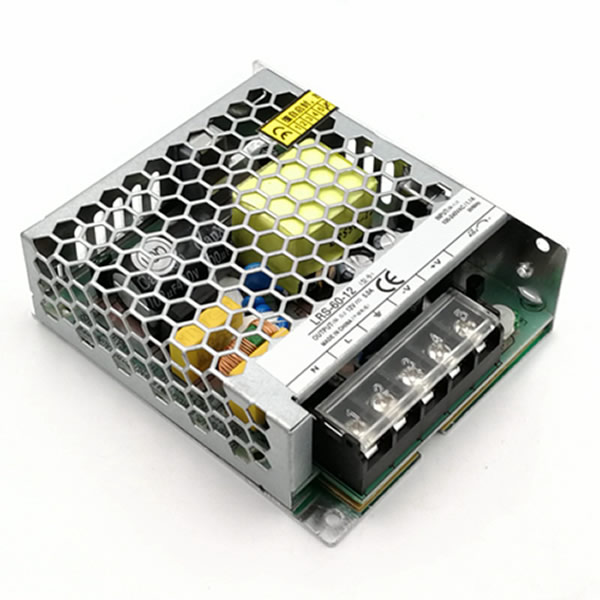
Low-Noise DC Brushless Cross Flow Fan
Designed for 19-inch telecom rack cooling, medical equipment, and precise power supply enclosures. Driven by 12V, 24V, or 48V DC brushless motors with ultra-smooth ball bearings.
Request Specs
Smart EC Energy-Saving Cross Flow Blower
Incorporates Electronically Commutated (EC) internal rotor motors for up to 70% energy efficiency improvement. Fully compliant with EU ErP energy directive standards for green building projects.
Request Specs
Super-Slim Embedded Cross Flow Blower
Ultra-compact structural height (30mm–50mm profile) specifically developed for thin wall-mounted heaters, architectural floor trench convectors, and tight electronic displays.
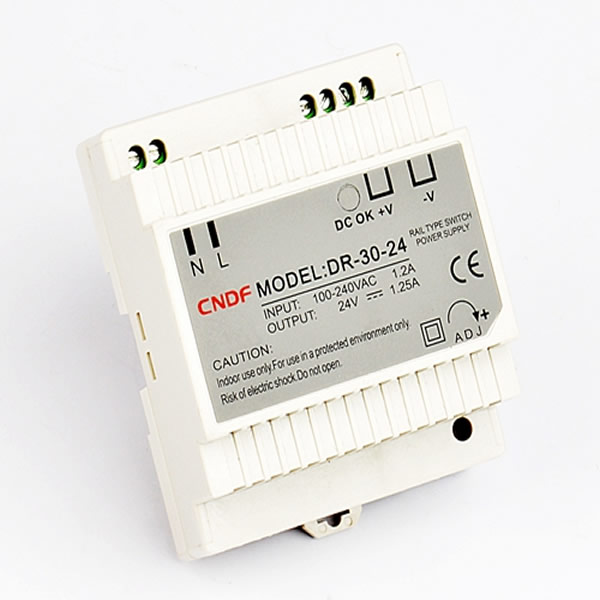
Request SpecsAdditionally, AWI Power Co., Ltd. provides complete power integration by pairing our Cross Flow Fans with our industry-recognized AC-DC Switching Power Supplies and DIN Rail Power Modules, guaranteeing absolute voltage stability and extended system MTBF (Mean Time Between Failures).
3. Future Product & Engineering Development Trends (2025–2030)
The global cooling fan market is undergoing rapid technological shifts driven by data center density escalation, decarbonization mandates, and smart industrial automation. Buyers evaluating long-term supplier partnerships must monitor three crucial engineering evolution vectors:
3.1 Transition to High-Efficiency EC (Electronically Commutated) Drives
Traditional AC shaded-pole motors are rapidly being phased out due to low electrical efficiency (often under 25-30%) and high internal heat radiation. Modern EC motors integrate AC-to-DC rectification and digital brushless control directly inside the motor housing. Operating at efficiency rates exceeding 75% to 85%, EC-driven Cross Flow Fans drastically reduce operational power expenses (OPEX) and operating temperatures, safeguarding sensitive downstream electronics.
3.2 CFD-Optimized Skewed Impellers & Polymeric Composite Materials
As structural lengths of tangential blowers expand past 600mm, physical weight and dynamic shaft deflection present mechanical challenges. Future product iterations utilize glass-fiber-reinforced polybutylene terephthalate (PBT) and high-rigidity anodized aluminum alloys. Skewed blade geometries dynamically break up vortex shedding frequency, shifting acoustic energy into non-audible spectrums.
3.3 Smart Sensor Integration & Predictive Maintenance
Industry 4.0 demands intelligent real-time feedback. Next-generation Cross Flow Fans manufactured by AWI Power Co., Ltd. can be equipped with integrated Hall-effect tachometer sensors, thermal protection switches, and Modbus RTU communication interfaces. These smart features allow system controllers to detect bearing wear, air-path blockage, or voltage anomalies prior to catastrophic system failure.
4. Global B2B Procurement Trends & Supply Chain Strategy
Supply chain vulnerability management and total cost of ownership (TCO) analysis are now top priorities for procurement executives in North America, Europe, and the Asia-Pacific region. Sourcing Cross Flow Fans involves strategic alignment on several critical operational parameters:
4.1 Shift Toward Customized OEM/ODM Turnkey Engineering
Off-the-shelf fan solutions rarely fit custom cabinet geometries perfectly. Leading global buyers are reducing time-to-market by collaborating with OEM manufacturers capable of rapidly customizing:
- Impeller Length & Diameter Ratios: Tailored to match exact heat exchanger width.
- Housing Duct & Deflector Angles: Customized to optimize static pressure conversion.
- Custom IP Code Ratings: IP54, IP55, or IP68 moisture and dust encapsulation using conformal resin coating for harsh industrial outdoor installations.
- Wire Harnesses & Terminal Connectors: Plug-and-play assembly integration (Molex, AMP, Deutsch, or custom terminal blocks).
4.2 Compliance, Environmental Certification & Carbon Footprint
International customs regulations require strict adherence to environmental directives. Procurement officers must verify that suppliers maintain full documentation for RoHS (Restriction of Hazardous Substances), REACH, CE Marking, and ISO 9001:2015 Quality Management Systems. Sourcing from certified manufacturers ensures zero compliance delays during international freight handling.
5. Corporate Engineering Strengths: Why Partner with AWI Power Co., Ltd.
Selecting AWI Power Co., Ltd. as your primary OEM/ODM cooling fan and power system partner grants immediate access to world-class manufacturing infrastructure, rigorous quality assurance, and deep engineering capabilities established over three decades.
30+ Years Mastery
Founded in 1989, offering unmatched expertise in electromagnetic motor design, fan dynamics, and power conversion.
19,500 m² Production
State-of-the-art manufacturing facility equipped with automated winding machines, dynamic balance testing, and CNC tooling.
100% Quality Burn-in
Every single product undergoes 100% full-load aging tests, dynamic imbalance verification, and high-voltage dielectric isolation tests.
15,600+ Global Clients
Trusted by engineering procurement teams across 30+ countries in industrial, medical, telecom, and automotive sectors.
Certified Compliance
Full international certification portfolio including CE, ISO 9001:2015, and RoHS environmental safety standards.
End-to-End OEM/ODM
Complete custom design capability from rapid 3D prototyping to mass injection molding and wire assembly.
Located in Yueqing Central Industrial Park, Wenzhou, Zhejiang Province, our vertically integrated plant allows us to maintain strict cost control while delivering fast lead times and unmatched product consistency across large-volume production runs.
6. Frequently Asked Questions (FAQ) — B2B Procurement & Technical Queries
Here are detailed engineering answers to the top questions asked by international buyers and technical architects on Google and AI search engines:
The primary difference lies in the airflow geometry and velocity uniformity. Axial fans draw air parallel to the fan shaft and blow it out in a turbulent helical pattern, creating a central dead zone underneath the motor hub. A Cross Flow Fan (tangential fan) pulls air transversely across the cylinder impeller blades and projects a uniform, planar, two-dimensional rectangular air stream across the entire width of the blower. This makes Cross Flow Fans ideal for application profiles requiring uniform edge-to-edge cooling or heating, such as air curtains, heat exchangers, and rack enclosures.
Required airflow (Q in CFM) can be estimated using the fundamental thermal equation: Q = (3.16 × P_diss) / ΔT, where P_diss represents total power dissipated as heat in Watts, and ΔT is the maximum allowable internal temperature rise above ambient air in degrees Fahrenheit (°F). Once the total CFM is determined, divide it by the active length of your cooling corridor to select the appropriate Cross Flow Fan impeller length and RPM rating.
Acoustic noise and mechanical vibration in long tangential blowers stem from dynamic shaft imbalance, uneven aerodynamic loading, and blade pass frequency (BPF) resonance. At AWI Power Co., Ltd., we mitigate these issues through two critical engineering steps: 1) Utilizing skewed (helical) blade configurations to smooth out pressure pulses, and 2) Subjecting 100% of impellers to computer-controlled dynamic balancing down to ISO 1940 G2.5 precision standards using high-grade stainless steel or aluminum balance clips.
For cost-sensitive consumer appliances operating at ambient temperatures below 40°C with horizontal mounting, sleeve bearings may suffice. However, for industrial-grade systems, high-temperature environments (up to 70°C–100°C), vertical mounting orientations, or continuous 24/7 duty cycles, Japanese NMB dual precision ball bearings are strongly recommended. Dual ball bearings extend operational lifespan (L10 life) to over 50,000–70,000 hours and prevent oil migration failures.
AWI Power Co., Ltd. offers full technical flexibility. For standard models, low Minimum Order Quantities (MOQs) are available for sampling and prototyping. For full OEM/ODM contracts, we customize custom mounting bracket dimensions, motor voltage inputs (12V DC up to 400V AC/EC), special lead wire lengths, waterproof IP ratings (IP54/IP68), and integrated speed sensors (FG/PWM/0-10V).
Our 19,500 m² factory operates automated stator winding lines, high-speed stamping presses, and integrated assembly stations. Combined with our strict ISO 9001:2015 quality control framework and 100% full-load burn-in aging procedures, we guarantee zero-defect delivery. Standard sample lead times are typically 3 to 7 working days, while bulk OEM shipments are fulfilled efficiently via Ningbo or Shanghai sea ports.
Accelerate Your System Cooling Performance Today
Need customized Cross Flow Fan specifications, CAD models, thermal testing samples, or competitive bulk factory pricing? Contact our senior engineering team directly for immediate assistance within 24 hours.