

Expert articles, application notes, and industry guides from AWI Power Co., Ltd.
In-depth insights into AC-DC switching power supplies, pure sine wave inverters, and thermal management.
Choosing the best Security Power Supply in China depends on the system it must support, not just its price or advertised wattage. A compact access-control panel, a network video recorder, and a multi-door alarm system place different demands on a power unit. The right choice should match the equipment’s voltage, current, backup time, and installation conditions. Small details matter. A loose terminal, undersized cable, or poorly ventilated cabinet can undermine an otherwise capable supply.
China offers a wide range of manufacturers and product configurations, so buyers should compare specifications carefully. Check rated output under realistic loads, battery-charging performance, overload and short-circuit protection, and operating-temperature limits. Ask for clear technical documentation and test reports that apply to the exact model. For a real installation, a qualified technician can verify load calculations, wiring, and battery autonomy before commissioning. Supplier responsiveness matters too; replacement parts and useful troubleshooting support are practical advantages. A polished product page is not enough. Neither is the lowest quote.
This guide explains how to assess these factors and compare options for different security applications. It does not treat one brand or specification as universally best. Requirements vary, and published figures may not reflect performance in a crowded cabinet or during a long outage. That deserves attention. With a clear checklist, buyers can make a more informed decision and avoid paying for capacity they do not need—or choosing too little for the system they depend on.
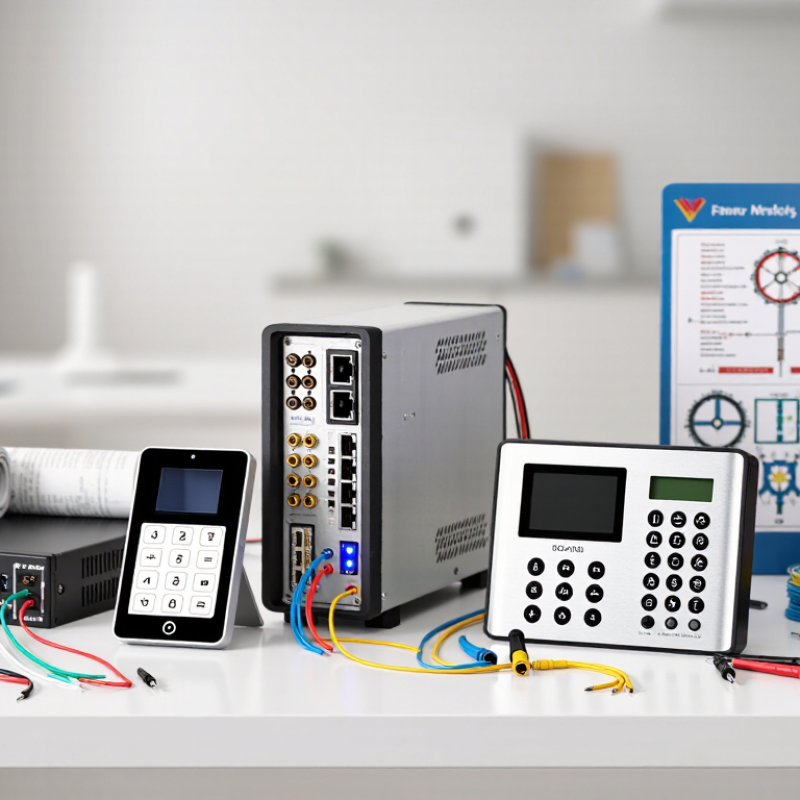
A security power supply converts incoming alternating current into stable direct current for cameras, access-control devices, and other low-voltage equipment. It also divides power among connected devices, often through separate fused outputs. In practical terms, the box may sit in a utility cupboard while cables run through walls to cameras outside. Each device needs the correct voltage and enough current to operate reliably.
Not quite. Cable length matters too. Voltage can drop along a long or thin cable, causing a camera to restart or produce a dim image at night. A technician should calculate the combined load, check cable distances, and leave some capacity for future equipment. These checks are easy to overlook when the system works during a quick daytime test.
Some supplies include a rechargeable backup battery. If mains power fails, the battery can keep selected devices running for a limited time. Its runtime depends on battery condition and the connected load, so it should be tested rather than assumed. Heat matters. A crowded enclosure can shorten component life, while poor ventilation may make faults harder to trace. Choosing a suitable supply is less about a high wattage number and more about matching voltage, current, protection, battery needs, and installation conditions. Even careful calculations may need adjustment after installation; real cable routes are not always neat.
Many security devices use regulated low-voltage DC power. A power supply converts mains AC into DC and regulates its output. This chart illustrates the relationship between current and power at a nominal 12 V: power in watts equals voltage in volts multiplied by current in amperes. The values are calculations, not ratings for a particular power supply or device.
Security sites in China commonly use regulated DC supplies, Power over Ethernet (PoE), and uninterruptible power supplies (UPS). Regulated 12V or 24V DC units suit cameras, access controllers, and alarm sensors. Check each device’s voltage, peak current, and polarity before selecting a supply. Small details matter.
PoE carries data and power over one Ethernet cable, reducing wiring for network cameras. IEEE 802.3bt-2018 allows up to 90 watts from the power sourcing equipment; the device receives less after cable losses. For centralized systems, a UPS can keep recorders and network switches running during brief outages. Backup time depends on battery capacity and actual load, so a larger rating alone does not guarantee longer runtime. No single type suits every site.
Tips: Measure the load, include startup peaks, and leave headroom. Test backup runtime with the real equipment connected. A neat cabinet can still hide poor ventilation or overloaded circuits. Check both.
What Is the Best Security Power Supply in China?
Key Performance and Safety Standards to Consider
A dependable security power supply should hold its output steady when cameras, readers, or alarms draw power at the same time. Check rated output, voltage tolerance, ripple, and performance at full load—not just the label. Test with the actual cable length and connected equipment. Small voltage drops can cause intermittent resets. Annoying, and easy to miss.
Safety and compliance need equal attention. China’s GB 4943.1-2022 addresses safety for relevant audio, video, and information technology equipment; GB/T 9254.1-2021 covers electromagnetic emissions for applicable equipment. Confirm the product’s classification and current requirements with a qualified testing laboratory. Also examine short-circuit, overload, and over-temperature protection, plus enclosure temperature during extended operation. A certificate alone cannot show how a unit behaves in a cramped cabinet.
Reliability matters because power failures can disrupt an entire site. Uptime Institute’s 2024 Annual Outage Analysis reported that 54% of surveyed respondents said their most recent significant outage cost more than $100,000. That figure concerns data-center outages, not security supplies, but it illustrates the operational stakes. For battery-backed systems, request documented runtime tests at the intended load and battery condition. I would not trust a runtime estimate without its test conditions. Some specifications are still too vague.
The best choice depends on the equipment, cable run, and site conditions. For a small camera installation, list each device’s rated voltage and maximum current, then add the loads together. Allow roughly 20% spare capacity for startup peaks and future additions. Check voltage at the device, not only at the supply terminals. Long, thin cables can cause noticeable drops.
For network cameras, compare the required power with the IEEE 802.3 PoE class. The standard defines source outputs up to 15.4 W, 30 W, and 90 W across common PoE types; the usable power at the device is lower. For access-control panels or recorders, check continuous load, surge demand, and whether backup batteries are required. Small detail, big impact.
Site conditions matter too. Choose suitable ingress and temperature ratings for dusty cabinets, damp entrances, or unheated outdoor enclosures. Uptime Institute’s 2024 Annual Outage Analysis found that 54% of respondents’ most recent significant outages cost more than $100,000. That is not a security-system-only statistic, but it shows why power continuity deserves attention. Test battery runtime under the actual load. A calculation helps, but it can still miss aging batteries or cold-weather losses.
Choosing the best security power supply in China is less about the lowest quotation than the support behind it. Compare manufacturers on output stability, battery compatibility, protection features, traceability, and test records. Request load-test results for your expected voltage and temperature range. A polished datasheet helps. It does not prove reliable service.
Support affects total cost of ownership. Check warranty exclusions, spare-part availability, repair turnaround, and remote fault-diagnosis options. Ask who pays shipping when a unit fails. Then estimate battery replacement, installation labor, energy use, and routine testing over a realistic service life. Small costs add up. A low purchase price can lead to repeated site visits.
Uptime Institute’s 2024 Annual Outage Analysis reported that 54% of surveyed organizations said their most recent significant outage cost more than $100,000; 16% reported costs above $1 million. These figures concern data-center outages, not security power supplies specifically, but they show why downtime belongs in a cost comparison. For each supplier, record purchase price, replacement assumptions, response time, and the cost of lost camera or access-control coverage. One assumption deserves scrutiny: quoted service life is not guaranteed life. Check it against operating conditions and written support terms.
| What Is the Best Security Power Supply in China? — Comparing Manufacturers, Support, and Total Cost of Ownership | ||||
|---|---|---|---|---|
| Comparison Dimension | Value-Focused Supplier Profile | Balanced Supplier Profile | Industrial-Grade Supplier Profile | How to Evaluate |
| Typical application | Small CCTV or access-control installations with modest load and limited expansion. | Commercial installations needing a balance of backup capability, documentation, and cost. | Critical or demanding sites where monitoring, redundancy, or service continuity matters. | Match the unit to the connected equipment, installation environment, and consequences of downtime. |
| Output voltage and capacity | Common configurations include 12 V DC or 24 V DC; capacity varies by model. | Common configurations include 12 V DC or 24 V DC; confirm rated and per-output limits. | Common configurations include 12 V DC or 24 V DC; confirm continuous-duty ratings and load-sharing options. | Check the equipment’s required voltage, total current, startup demand, and allowance for future expansion. |
| Battery backup | May support an external backup battery; runtime depends on battery capacity and load. | Often evaluated for charger behavior, battery protection, and low-battery signaling. | May offer more extensive battery monitoring or fault reporting; confirm features on the specific model. | Ask for runtime calculations at the actual load. A battery’s rated amp-hours alone do not establish usable runtime. |
| Protection and enclosure | Verify overcurrent, short-circuit, and thermal protection in the product documentation. | Review protection details, terminals, enclosure construction, and installation instructions. | Assess protection coordination, temperature limits, serviceability, and suitability for the site environment. | Do not infer protection or environmental ratings from appearance; request the datasheet and test documentation. |
| Compliance documentation | Request a model-specific datasheet and applicable conformity documents. | Check that certificates and test reports match the exact model and intended market. | Confirm applicable Chinese requirements and any additional customer or project standards. | Verify the exact model, document scope, issuing body, and validity. Requirements depend on product type and use. |
| Technical support | Compare response channels, language availability, and access to wiring guidance. | Look for installation support, fault diagnosis, and clear warranty procedures. | Evaluate escalation paths, spare-parts availability, repair arrangements, and project support. | Request written response-time targets and clarify who handles support after installation. |
| Warranty and service | Warranty length and exclusions vary by supplier and model; verify them in writing. | Compare warranty coverage, return process, and repair or replacement turnaround. | Assess service commitments and the availability of replacement units for critical sites. | Compare coverage terms, transport costs, labor exclusions, and the practical time to restore service. |
| Illustrative equipment price | ¥180 | ¥420 | ¥900 | Illustrative planning inputs only—not supplier quotations or verified market averages. |
| Illustrative efficiency used for TCO | 85% | 88% | 90% | Example assumptions for calculation only. Use the tested efficiency at the actual operating load when available. |
| Illustrative five-year electricity cost | ¥1,649 | ¥1,593 | ¥1,558 | Calculated using a continuous 40 W DC load, 0.80 yuan/kWh, and the illustrative efficiencies above. |
| Illustrative battery replacement allowance | ¥90 | ¥140 | ¥220 | Assumes one replacement allowance during five years. Actual battery type, service life, and replacement cost vary. |
| Illustrative five-year total cost of ownership | ¥1,919 | ¥2,153 | ¥2,678 | Equipment price + estimated electricity cost + one battery replacement allowance. Excludes installation, maintenance labor, downtime, and financing. |
| Best-fit decision | Consider when upfront cost is important and project requirements are straightforward. | Consider when documentation, support, and lifecycle cost all carry meaningful weight. | Consider when operational risk or serviceability justifies a higher initial budget. | There is no universal “best” option: compare verified specifications, service terms, and site-specific five-year costs. |
| Method note: Supplier profiles and TCO figures are illustrative comparison scenarios, not claims about specific manufacturers or live Chinese market prices. The electricity estimates use: input power = 40 W ÷ efficiency; annual operation = 8,760 hours; electricity price = ¥0.80/kWh; period = five years. Obtain model-specific quotations, efficiency data, warranty terms, and battery-runtime calculations before purchase. | ||||
Check rated output, voltage tolerance, ripple, and performance under full load. Test it with connected cameras, readers, alarms, and actual cable lengths. Small voltage drops can trigger resets.
A datasheet may not reflect long cables or several devices drawing power together. Connect the intended equipment and watch for unstable output. A polished specification is not proof.
Check for short-circuit, overload, and over-temperature protection. Measure enclosure temperature during extended operation, especially inside a cramped cabinet. Heat can be easy to overlook.
GB 4943.1-2022 addresses safety for relevant equipment, while GB/T 9254.1-2021 covers electromagnetic emissions for applicable equipment. Confirm product classification and requirements with a qualified testing laboratory.
Request documented runtime tests at your expected load and battery condition. Check the test details, not just the estimated hours. I would still question vague figures.
Compare output stability, battery compatibility, protection features, traceability, and test records. Ask for load-test results across your expected voltage and temperature range. Records matter.
Include purchase price, battery replacement, installation labor, energy use, and routine testing. Also estimate repair costs and possible loss of camera or access-control coverage. Small costs add up.
Check warranty exclusions, spare-part availability, repair turnaround, and remote fault-diagnosis options. Ask who pays shipping for a failed unit. Read the written terms carefully.
No. A 2024 industry analysis reported high costs for significant data-center outages, not security supplies specifically. It shows why downtime deserves consideration, but the comparison has limits.
A Security Power Supply converts incoming electrical power into stable, suitable output for security equipment, helping devices operate reliably during everyday use and, where backup is included, brief interruptions. Options available in China include centralized and individual power supplies, models with battery backup, and units designed for particular voltage or installation needs. The best choice depends on the equipment’s power requirements, the expected operating environment, and whether continuous operation is essential.
Before selecting a unit, compare its output capacity, voltage stability, protection features, temperature tolerance, and relevant safety and quality certifications. Match these specifications to the application, such as cameras, access-control systems, alarms, or a larger multi-device installation, while allowing reasonable capacity for future expansion. Also assess supplier experience, technical support, warranty terms, replacement availability, and expected service life. Looking beyond the purchase price to maintenance and operating costs can help identify a dependable, cost-effective solution for the long term.