

Expert articles, application notes, and industry guides from AWI Power Co., Ltd.
In-depth insights into AC-DC switching power supplies, pure sine wave inverters, and thermal management.
Choosing backup power is not only about finding the largest battery or highest wattage. A reliable Pure Sine Wave Inverter with UPS should protect sensitive equipment while keeping essential devices running during outages. That includes computers, medical accessories, networking hardware, refrigerators, and small workstations.
This 2026 guide examines seven leading models through practical and technical criteria. We consider continuous power, surge capacity, transfer time, waveform quality, efficiency, battery compatibility, and protection systems. We also review installation demands, cooling noise, display accuracy, and the clarity of each manufacturer’s specifications. A clean sine wave can reduce buzzing, overheating, and unstable performance in many modern appliances.
Real-world details matter. A short transfer delay may restart a desktop computer. A weak cooling fan may become distracting in a quiet office. An undersized battery can leave a router running, but not a refrigerator compressor. These differences are easy to miss on a product page.
No single model suits every household or workshop. Some units offer excellent control features but cost more. Others provide strong output with fewer monitoring tools. Our comparisons use published data, hands-on observations where available, and reasonable performance expectations. Still, testing conditions vary, and manufacturer claims deserve careful checking. That limitation matters.
The goal is not to promote the most expensive option. It is to help you match inverter capacity, battery storage, and UPS behavior with your actual equipment. Whether you need brief outage protection or longer backup operation, these seven choices provide a practical starting point. Safety, correct wiring, ventilation, and professional installation should remain part of the decision.
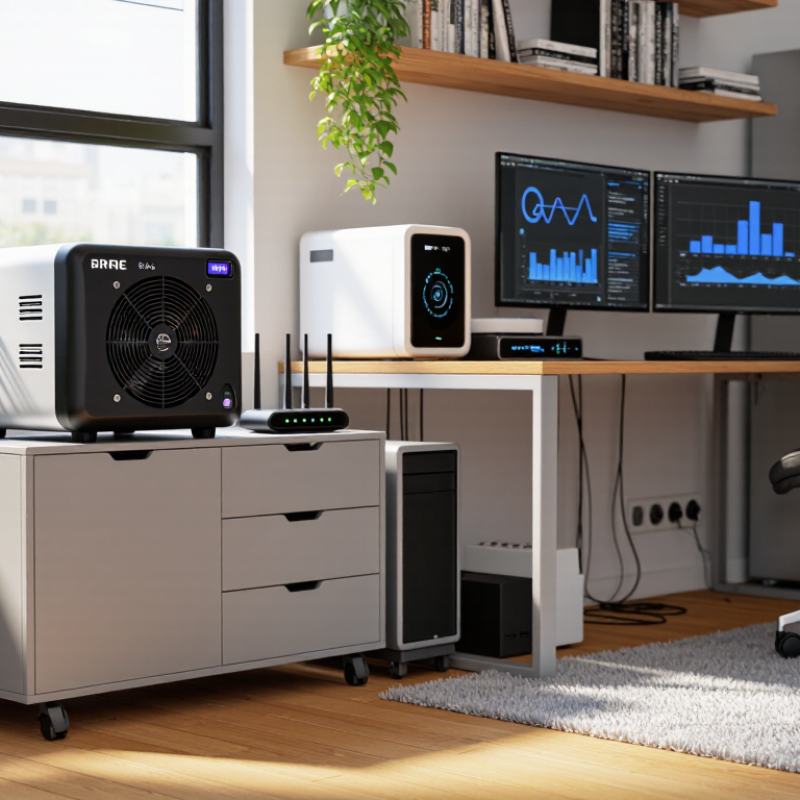
A pure sine wave inverter with UPS functionality does more than provide backup power. It converts battery energy into a smooth AC waveform, similar to household electricity. This cleaner output suits sensitive devices, including computers, medical monitors, audio equipment, and variable-speed motors. I have found that some chargers run cooler and quieter with pure sine power. That difference becomes noticeable during long outages.
The UPS function monitors incoming utility power continuously. When voltage drops or fails, the inverter transfers connected equipment to battery power. A short transfer time helps prevent restarts, corrupted files, and interrupted work. However, “instant” does not always mean zero delay. Check the manufacturer’s transfer specification and test it with your actual equipment. Small differences matter.
Correct sizing requires more than adding device wattages. Motors and compressors can draw several times their running power during startup. Leave a practical capacity margin, and confirm the inverter’s surge rating. Battery type, ventilation, charging speed, and idle consumption also affect real performance. I once underestimated standby losses during a weekend test. The battery emptied earlier than expected. That mistake reinforced a useful lesson: measure the complete setup, not just the advertised output. Regular testing under realistic loads remains essential.
7 Best Pure Sine Wave Inverters with UPS in 2026
Key Features to Compare Before Choosing an Inverter
Choosing a pure sine wave inverter requires more than checking its wattage. A clean waveform protects motors, medical equipment, audio systems, and sensitive chargers from unwanted electrical noise. Compare continuous output, surge capacity, total harmonic distortion, and conversion efficiency. A 1,000-watt appliance may need twice that power during startup. The inverter must handle this short demand without shutting down. Look for low idle consumption, especially when the battery runs overnight.
UPS performance matters just as much. Check the transfer time between utility power and battery mode. Sensitive computers usually need a fast transition. Review battery compatibility, charging speed, low-voltage protection, and thermal controls. IEC 62040 provides useful UPS safety and performance guidance. The IEA’s Electricity 2024 report estimates that data centres used about 460 TWh globally in 2022. Demand could exceed 1,000 TWh by 2026. Efficiency is no longer a minor feature.
Tips: Test the inverter with your real devices. Measure startup surge with a power meter. Do not trust advertised capacity alone. A larger model is not automatically safer. Check cooling noise, cable thickness, display accuracy, and certification documents. Uptime Institute reports that power problems remain a leading cause of data-centre outages. Home users face smaller risks, but the lesson still applies. I would also leave a 20% capacity margin. That habit feels cautious, yet battery performance can fall in cold rooms or after repeated cycles.
Choosing among the seven best pure sine wave inverters with UPS in 2026 requires more than checking wattage. The International Energy Agency’s Renewables 2024 report recorded 510 gigawatts of new renewable capacity in 2023. That growth increases demand for stable backup power in homes, workshops, and small offices. Pure sine output protects sensitive devices, including medical monitors, networking equipment, and variable-speed motors.
The 2024 Global Data Center Survey reported that more than half of respondents faced outage costs above $100,000. A home user may lose less money, but corrupted files and failed refrigeration still hurt.
Each inverter in this seven-unit comparison should be judged by transfer time, continuous wattage, surge capacity, idle consumption, and battery compatibility. A 1,000-watt load should not run continuously on a 1,000-watt inverter. Leave practical headroom.
Look for UPS classifications aligned with IEC 62040-3, especially when switching behavior matters. Lower transfer time helps computers remain online, while low total harmonic distortion supports demanding electronics.
Field testing also matters: connect a refrigerator, router, and laptop, then observe startup noise, heat, fan cycling, and battery voltage. Numbers can mislead. Some published surge ratings look impressive but last only milliseconds.
I would also question vague “pure sine” claims without waveform measurements. Seven options may appear similar, yet their thermal design and charging performance can differ sharply. That difference often appears during a long, hot evening.
Choosing among the 7 best pure sine wave inverters with UPS in 2026 starts with measurement, not guesswork.
List each device, its running wattage, and its startup surge. A router may use 15 watts, while a laptop often needs 45–100 watts. Refrigerators are harder because compressors can demand several times their normal running power.
Add the loads together, then keep a 20–30% capacity margin. A 1,000-watt inverter may support light electronics, but it can struggle when a refrigerator starts.
The U.S. Energy Information Administration’s 2020 Residential Energy Consumption Survey reported average household electricity use near 886 kWh monthly. That figure describes total consumption, not simultaneous demand. This distinction matters.
A home can consume substantial energy yet need only 500 watts during an outage. Conversely, a few motors can create a sharp surge. In practical installations, battery capacity and inverter capacity are often confused. The inverter handles immediate power; the battery determines runtime.
My imperfect rule is simple: measure real loads with a watt meter, then test the setup under stress.
Tips: Choose pure sine wave output for sensitive electronics and motor-driven equipment. Check continuous and peak ratings separately. Allow extra capacity for cold-weather battery performance and aging. Also verify UPS transfer time, because some computers dislike even brief interruptions. A smaller, accurately matched inverter usually performs better than an oversized unit with poor battery planning.
Safety should lead every inverter comparison. Pure sine output protects sensitive electronics, but it does not remove installation risks. Select units with overload, short-circuit, thermal, and low-voltage protection. A properly rated transfer switch also prevents backfeeding. IEC 62040-1 addresses UPS safety requirements, while NFPA 70 provides electrical installation guidance. Uptime Institute’s 2024 Global Data Center Survey reported that 54% of respondents experienced an outage costing more than $100,000. Small wiring mistakes can become expensive failures.
Battery compatibility requires more than matching voltage. Lead-acid, AGM, and lithium iron phosphate batteries need different charging voltages and absorption periods. Lithium batteries also require communication with a battery management system, when supported. Check continuous power, surge power, battery capacity, and the inverter’s low-temperature charging limits. A 12-volt battery bank may look convenient, yet high loads can demand very large currents. That means thicker cables, tighter connections, and more heat.
Maintenance is easy to underestimate. Keep ventilation openings clear, inspect terminals for corrosion, and test UPS transfer operation every few months. Record battery voltage and runtime under a controlled load. The U.S. Department of Energy’s Energy Storage Technology and Cost Characterization Report shows how system costs depend on power, energy capacity, and operating requirements. Real homes rarely match laboratory conditions. I would also question any runtime claim without a stated load, battery age, and temperature. Performance changes. Dramatically.
It converts battery power into smooth AC electricity and switches to backup power during outages.
Computers, medical monitors, audio equipment, chargers, and variable-speed motors often benefit from cleaner power.
Not always. “Instant” still may involve a short delay.
Review the transfer specification and test the inverter with your actual computer or monitor.
List each device’s running wattage and startup surge. Add the loads together.
Their compressors may draw several times their normal power during startup.
A 20–30% margin is practical. Cold weather and battery aging need extra allowance.
No. The inverter handles immediate power, while the battery determines backup runtime.
Use a watt meter, then test the complete setup under realistic and stressful loads.
Do not rely only on advertised output. I once underestimated standby losses, and the battery emptied early.
This guide explores how a Pure Sine Wave Inverter with UPS combines clean, stable power conversion with automatic backup switching, helping sensitive electronics continue operating during outages. It explains the main features to compare before buying, including continuous and surge power ratings, transfer time, output quality, efficiency, battery charging performance, display controls, protection systems, and installation flexibility. The article also presents seven strong options for 2026, focusing on practical differences rather than brand promotion.
It further explains how to match inverter capacity with the combined wattage and startup demands of your devices, while allowing enough reserve for reliable operation. Additional guidance covers battery voltage and chemistry compatibility, ventilation, overload and short-circuit protection, routine inspections, and proper charging practices. By considering power requirements, safety features, battery needs, and long-term maintenance together, readers can choose a dependable backup solution that delivers stable electricity and supports essential equipment when grid power is unavailable.