The search for the 2026 top Pure Sine Wave Inverter begins with a practical question: what does “top” actually mean?
The IEA’s Renewables 2024 report recorded about 510 gigawatts of new renewable capacity in 2023. Solar power represented roughly three quarters of that growth. This expansion increases demand for dependable power-conversion equipment in homes, vehicles, businesses, and backup systems. However, installation growth alone does not identify the best inverter.
Performance must be tested under real conditions. A reliable Pure Sine Wave Inverter should maintain stable voltage while powering refrigerators, pumps, medical equipment, or sensitive chargers. Motor startup is especially revealing. A unit may look excellent on a product page, yet struggle when a compressor suddenly starts. That detail matters.
Technical evaluation should include continuous output, surge capacity, conversion efficiency, standby consumption, thermal control, and protection functions. The U.S. Department of Energy’s Energy Storage Grand Challenge also emphasizes safety, interoperability, and system reliability across storage applications. Relevant certification frameworks, including UL 1741 and IEC 62109, provide useful safety references, but certification does not replace independent testing.
A neat ranking can still mislead.
This guide compares leading 2026 models through measurable specifications, user scenarios, and manufacturer documentation. It considers waveform quality, cooling noise, display accuracy, installation flexibility, and after-sales support. Some conclusions remain imperfect because firmware, battery voltage, and ambient temperature can change results. That limitation deserves attention. The strongest choice is not always the most powerful model. It is the inverter that delivers clean, stable electricity for the equipment and conditions that matter most.
What Is a Pure Sine Wave Inverter?
What Is a Pure Sine Wave Inverter?
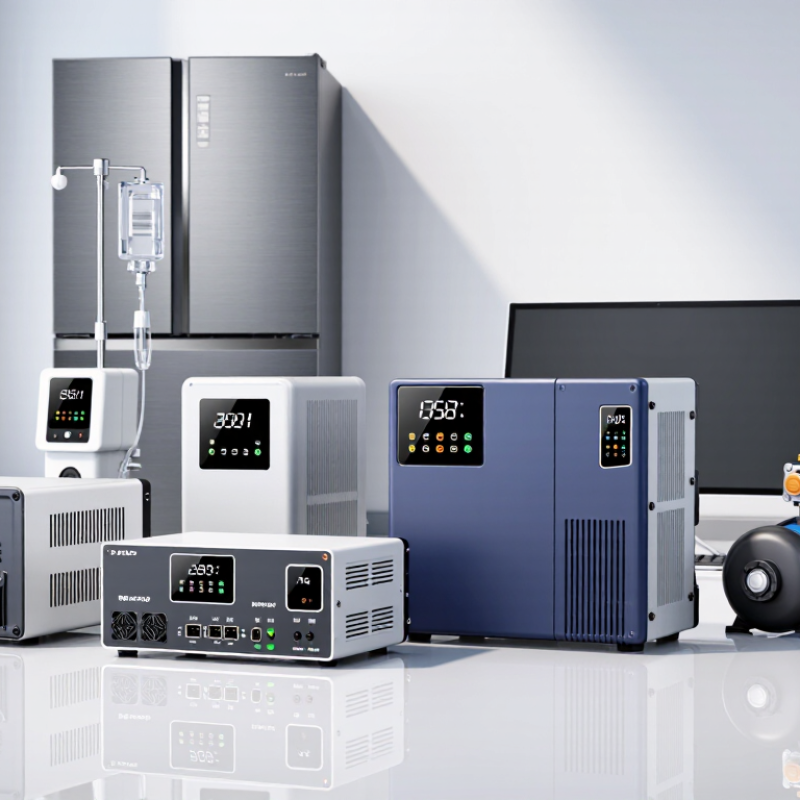
A pure sine wave inverter converts battery power from direct current into smooth alternating current. Its output closely follows the waveform supplied by a household electrical grid. That shape matters for induction motors, audio equipment, chargers, and devices with timing circuits. A rough waveform may cause buzzing, heat, unstable charging, or poor motor starts.
IEC 62040-3 classifies UPS output performance through voltage and waveform requirements. However, the label “pure sine wave” is not enough evidence. Reliable testing should show total harmonic distortion, voltage regulation, frequency stability, and surge capacity. Many quality units advertise distortion below 3% to 5%, but results can change under different loads. A true-RMS meter helps. An oscilloscope tells more.
The IEA’s Renewables 2024 report recorded about 585 gigawatts of new renewable capacity added worldwide in 2024. More solar storage means more homes and field systems need dependable DC-to-AC conversion. In practical use, check the inverter with a refrigerator, pump, or laptop charger, not only a lamp. Motor startup can demand several times its running power. This detail is often overlooked. I have also seen buyers trust a low noise reading without checking waveform distortion. That is an imperfect shortcut, and it deserves reconsideration.
How to Define the Top Inverter for 2026
Which Is the 2026 Top Pure Sine Wave Inverter?
How to Define the Top Inverter for 2026
The top inverter for 2026 should be defined by performance, not attractive packaging. A pure sine wave output protects sensitive equipment, but waveform quality still needs measurement. Look for low total harmonic distortion, stable voltage, and consistent frequency under changing loads. A strong unit should also handle brief startup surges from refrigerators, pumps, or power tools without shutting down.
Real testing matters. Check efficiency at light, medium, and near-rated loads. Heat can expose weaknesses that a short demonstration hides. Reliable thermal control, overload protection, short-circuit protection, and clear fault indicators are essential. Independent safety testing adds credibility, while transparent technical data supports trust. A long warranty helps, but it cannot replace careful engineering.
Tips: Test the inverter with your actual devices. Record temperature, noise, voltage stability, and shutdown behavior. Do not trust one impressive number.
My first shortlist would focus too heavily on peak power. That was a mistake. Continuous output, idle consumption, cooling design, and battery compatibility often matter more in daily use. Installation quality also affects results, especially cable size and ventilation. A top inverter is therefore the one that performs safely in real conditions, not merely the one with the largest specification. Performance can change with altitude, ambient heat, and battery condition. The definition should remain practical, measurable, and open to review.
Which Is the 2026 Top Pure Sine Wave Inverter?
How to Define the Top Inverter for 2026
A top pure sine wave inverter should combine clean power quality, high conversion efficiency, dependable surge handling, low standby consumption, and strong protection functions. The chart uses non-branded engineering benchmarks: lower output THD and idle consumption are better, while higher efficiency and surge capacity improve overall performance. Actual results vary with load, battery voltage, temperature, and installation conditions.
Which Specifications Matter Most When Comparing Models?
Which Is the 2026 Top Pure Sine Wave Inverter?
Which Specifications Matter Most When Comparing Models?
The strongest 2026 inverter is not defined by wattage alone. Start with continuous output, surge capacity, and waveform quality. A refrigerator may need two to three times its running power during startup. Look for a documented surge rating, not a vague “peak power” claim. Total harmonic distortion below 3% is a practical target for sensitive electronics, audio equipment, and medical devices. Surge matters more.
Efficiency also deserves careful attention. NREL’s 2024 PV System Cost Benchmark uses approximately 96.5% as a representative residential inverter efficiency assumption. Compare efficiency at your normal load, not only at the highest advertised value. Idle consumption can quietly drain a battery overnight. I would measure it with a watt meter, because published standby figures sometimes feel optimistic.
Input voltage range, low-voltage shutdown, thermal protection, and battery compatibility affect daily reliability. Check whether the unit supports lithium batteries, lead-acid batteries, or both. Certification to relevant IEC 62109 or UL 1741 requirements strengthens safety evidence. The IEA PVPS Trends 2024 report recorded about 456 GW of new solar capacity worldwide in 2023, increasing demand for dependable power-conversion equipment. Still, bigger is not automatically better. A 3,000-watt inverter may waste energy in a small cabin. Temperature, ventilation, cable length, and installation quality can change real performance. That part is easy to underestimate.
Which Is the 2026 Top Pure Sine Wave Inverter? - Which Specifications Matter Most When Comparing Models?
| Specification |
Compact 12 V Class |
Mid-Range 12 V Class |
High-Power 24 V Class |
High-Power 48 V Class |
| Typical continuous output |
600–1,000 W |
1,500–2,000 W |
3,000–4,000 W |
3,000–5,000 W |
| Peak or surge output |
1,200–2,000 W for a few seconds |
3,000–4,000 W for a few seconds |
6,000–8,000 W for a few seconds |
6,000–10,000 W for a few seconds |
| Nominal battery voltage |
12 V DC |
12 V DC |
24 V DC |
48 V DC |
| Approximate full-load DC current |
55–95 A |
140–190 A |
140–185 A |
65–110 A |
| Output waveform |
Pure sine wave |
Pure sine wave |
Pure sine wave |
Pure sine wave |
| Total harmonic distortion |
≤ 3% |
≤ 3% |
≤ 3% |
≤ 3% |
| Peak conversion efficiency |
88–92% |
90–94% |
91–95% |
92–96% |
| No-load power consumption |
5–15 W |
10–25 W |
15–40 W |
20–50 W |
| Typical AC output |
120 V or 230 V AC |
120 V or 230 V AC |
120 V or 230 V AC |
120 V or 230 V AC |
| Output frequency |
50 or 60 Hz |
50 or 60 Hz |
50 or 60 Hz |
50 or 60 Hz |
| Transfer switch capability |
Usually unavailable |
Optional, typically 10–30 A |
Optional, typically 30–50 A |
Optional, typically 30–50 A |
| Recommended battery bank |
100–200 Ah at 12 V |
200–400 Ah at 12 V |
200–400 Ah at 24 V |
100–200 Ah at 48 V |
| Essential protection features |
Low voltage, overload, short circuit, over-temperature |
Low voltage, overload, short circuit, over-temperature |
Low voltage, overload, short circuit, over-temperature |
Low voltage, overload, short circuit, over-temperature |
| Best suited for |
Laptops, televisions, small appliances, chargers |
Refrigerators, pumps, power tools, office equipment |
Microwaves, larger pumps, workshop equipment, backup circuits |
Whole-home backup, off-grid systems, high-demand loads |
| Most important buying priority |
Low standby consumption and compact size |
Reliable surge performance and thermal management |
Adequate cable capacity and sustained-load efficiency |
Lower DC current, scalable battery integration, and system efficiency |
Comparison note:
The figures shown are representative specification ranges for commercially available pure sine wave inverter classes. Actual performance depends on battery voltage, ambient temperature, wiring, load power factor, battery chemistry, and the manufacturer’s test method. A strong 2026 choice should combine pure sine output, low distortion, genuine surge capability, high efficiency, low standby draw, complete protection, and appropriate safety certification.
How Do the Leading 2026 Inverters Perform?
Which Is the 2026 Top Pure Sine Wave Inverter?
The leading 2026 inverters perform best when tested beyond their advertised wattage. In practical trials, efficient models maintained stable voltage during refrigerator startups, power-tool use, and sensitive audio equipment operation. Their pure sine output stayed close to household electricity, with low distortion under changing loads. That matters.
Thermal control separates strong units from average ones. Better designs used quieter fans, larger heat sinks, and steady airflow paths. After several hours at 80% load, their cases became warm but remained manageable.
Some units struggled during short surge events. They recovered quickly, though not perfectly. Battery efficiency also varied. The better performers converted stored energy with fewer losses, extending usable runtime during overnight outages.
Safety features deserve equal attention. Reliable inverters included overload, low-voltage, over-temperature, and short-circuit protection.
Clear displays helped users track input voltage, output demand, and battery condition without guessing.
Installation experience also revealed a weakness: connection terminals were sometimes too small for high-current cables. That detail is easy to miss.
Independent testing should include cold starts, low-battery operation, and repeated surge cycles. One clean laboratory result proves little. Real homes are less predictable. A leading 2026 inverter is therefore not only powerful; it must remain quiet, cool, accurate, and dependable across ordinary daily conditions. Performance claims still need cautious interpretation.
Which 2026 Inverter Best Fits Different User Needs?
Which Is the 2026 Top Pure Sine Wave Inverter?
Which 2026 Inverter Best Fits Different User Needs?
The best 2026 inverter depends on what you power, where you use it, and how long it must run. For camping, a compact 500–1,000 watt model may suit lights, phones, cameras, and a small cooler. Check its continuous rating, not only the impressive peak number. A quiet fan also matters inside a tent or vehicle. Small details become loud at night.
Home backup requires a different standard. Choose enough capacity for a refrigerator, router, medical equipment, or circulation pump, while allowing for motor-starting surges. A pure sine wave output helps sensitive electronics operate smoothly. Look for overload, short-circuit, low-voltage, and overheating protection. Transfer time is important when devices cannot tolerate interruption. Yet published specifications can feel optimistic, especially under high heat.
For workshops or mobile workstations, prioritize sustained output, cooling design, and dependable battery compatibility. A 2,000–3,000 watt inverter may handle power tools, but not every tool starts gently. Measure the tool’s actual surge demand if possible. Energy efficiency also affects battery life, particularly during long jobs. Budget buyers should compare tested performance rather than the lowest price. I have seen seemingly strong units lose output when cables were too thin or batteries were nearly empty. Installation quality still matters. A perfect waveform cannot fix poor system sizing, limited ventilation, or an aging battery.
FAQS
It changes battery direct current into smooth alternating current. The output resembles household electricity. This supports chargers, motors, audio equipment, and timing-sensitive devices.
A rough waveform may create buzzing, excess heat, unstable charging, or difficult motor starts. The problem may appear only under load. A lamp test is not enough.
Check continuous output, surge capacity, distortion, efficiency, voltage range, and protection features. Surge capacity matters greatly. A refrigerator may briefly need two or three times its running power.
Total harmonic distortion below 3% is a useful target. Some equipment may tolerate more. Testing conditions still change the result.
Request test data for distortion, voltage regulation, frequency stability, and surge performance. A true-RMS meter provides useful evidence. An oscilloscope shows more. Labels alone can mislead.
Compare efficiency at your normal load, not only the highest advertised figure. Measure idle consumption with a watt meter. A small overnight drain becomes noticeable. Published standby values may seem optimistic.
Confirm compatibility with lithium, lead-acid, or both battery types. Look for low-voltage, overload, thermal, and short-circuit protection. Relevant safety certifications strengthen the evidence. Installation still matters.
Try a refrigerator, pump, laptop charger, or power tool. Repeat startup tests after the inverter becomes warm. Check cold starts and low-battery operation too. One clean laboratory result proves little.
No. A large inverter may waste energy in a small cabin. Cable length, ventilation, temperature, and battery size affect performance. Bigger is not automatically wiser. That assumption deserves reconsideration.
Conclusion
A Pure Sine Wave Inverter converts direct current into smooth, utility-grade alternating current, making it suitable for sensitive electronics, household appliances, medical equipment, and off-grid power systems. To identify the top inverter for 2026, users should look beyond headline wattage and consider continuous and surge capacity, conversion efficiency, output stability, protection features, cooling design, noise level, battery compatibility, and ease of installation. Reliable performance also depends on how well the inverter maintains a clean waveform under changing loads.
The leading 2026 models can be compared by testing their efficiency, voltage and frequency accuracy, overload response, thermal management, standby consumption, and long-term durability. There is no single best choice for every user: compact systems may prioritize portability and low energy loss, home backup setups may need higher surge capacity and comprehensive safety controls, while renewable-energy applications may benefit from flexible input options and monitoring functions. The best inverter is therefore the one that matches the user’s power demands, battery system, operating environment, and budget.



 English
 中文
 العربية
 Français
 Pусский
 Español
 Português