

Choosing the 2026 Best Pure Sine Wave Inverter with Charger requires more than comparing wattage and price. A reliable unit must convert battery power into clean electricity for sensitive appliances, including refrigerators, medical equipment, laptops, and communication devices. Its charger should also replenish batteries efficiently without excessive heat or unstable voltage.
Real-world testing matters here. A specification sheet may promise 2,000 watts, yet a refrigerator compressor can demand a brief startup surge. Cable length, battery chemistry, ventilation, and ambient temperature also affect performance. In practical use, I would inspect waveform quality, transfer time, charging stages, idle consumption, overload protection, and noise. Small details matter. A cooling fan running beside a bed can become surprisingly annoying.
This guide compares inverter-charger options through measurable features and everyday experience. It considers continuous output, surge capacity, battery compatibility, installation requirements, warranty support, and manufacturer documentation. Independent certifications and clear safety instructions deserve serious attention. However, no single model suits every cabin, backup system, vehicle, or off-grid installation. That is easy to overlook.
Some ratings may change with testing equipment, battery condition, or installation quality. Results should therefore be treated as useful evidence, not absolute truth. A lower-priced inverter may perform well in light-duty applications, while a premium model may justify its cost through better controls and stronger support. The right choice is not always the most powerful one. It is the model that delivers clean power, safe charging, and dependable operation under your actual load.
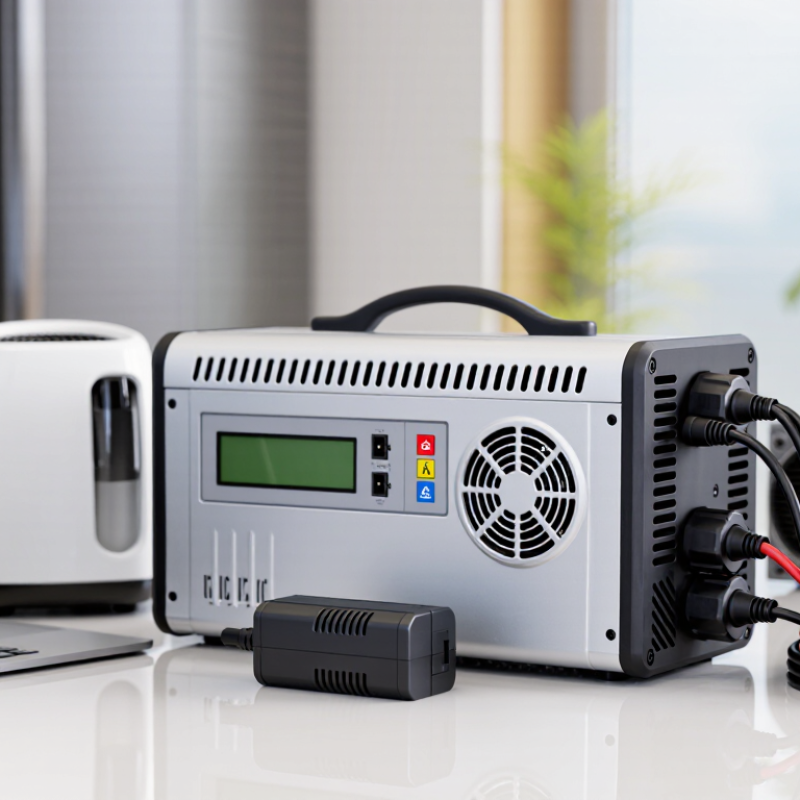
A pure sine wave inverter charger converts battery power into smooth alternating current for household appliances. Its output closely matches utility electricity. This matters for motors, audio equipment, refrigerators, and sensitive electronic chargers.
The charger reverses the process when shore power or a generator is available. It replenishes the battery while an internal transfer system supplies connected loads. During an outage, the inverter changes modes automatically, often within milliseconds. A good unit should specify continuous wattage, surge capacity, charging current, battery compatibility, and total harmonic distortion. Lower distortion usually means quieter motors and steadier performance.
Details matter.
In practical installations, poor ventilation can reduce output and shorten component life. I would leave clear space around the enclosure and use correctly sized cables, fuses, and grounding. The best 2026 model is not simply the most powerful option. It should match the battery voltage, expected load, and daily charging conditions. A refrigerator may need several times its running wattage during startup. That small detail is easy to miss.
Pure sine wave does not guarantee perfect protection. Some units have limited overload response, inaccurate displays, or noisy cooling fans. Specifications can also look impressive while hiding standby consumption. Check independent test data when possible, then compare it with the manufacturer’s installation instructions. A qualified electrician should verify fixed wiring and grounding before regular use.
A pure sine wave inverter charger combines DC-to-AC inversion, AC battery charging, and automatic transfer switching in one unit. The comparison below uses typical engineering specification ranges for common system sizes rather than brand-specific products.
| Typical System Profile | Recommended Use | Nominal Battery Voltage | Continuous AC Output | Short-Term Surge Capability | Typical AC Charging Current | Typical Inverter Efficiency | Automatic Transfer Time | Recommended Battery Capacity* | Key Selection Consideration |
|---|---|---|---|---|---|---|---|---|---|
| Compact backup system | Routers, laptops, LED lighting, televisions, and other light household loads | 12 V DC | 600–1,000 W | 1,200–2,000 W for approximately 1–3 seconds | 20–50 A | 88–94% | Typically 10–20 ms | 100–200 Ah at 12 V | Suitable for low-power loads; motor starting loads require additional surge margin. |
| General-purpose home backup | Refrigerators, small pumps, office equipment, lighting circuits, and entertainment systems | 12 V or 24 V DC | 1,500–2,500 W | 3,000–5,000 W for approximately 1–3 seconds | 40–100 A | 90–95% | Typically 10–20 ms | 200–400 Ah at 12 V, or 100–200 Ah at 24 V | Check the starting wattage of compressors, pumps, and other inductive equipment. |
| Medium off-grid system | Cabins, workstations, refrigeration, power tools, and selected kitchen appliances | 24 V DC | 2,500–4,000 W | 5,000–8,000 W for approximately 1–3 seconds | 60–120 A | 91–96% | Typically 10–20 ms | 200–400 Ah at 24 V | Higher battery voltage reduces DC current and usually allows more manageable cable sizes. |
| Large residential backup | Multiple refrigerator circuits, well pumps, heating controls, appliances, and selected HVAC loads | 48 V DC | 4,000–6,000 W | 8,000–12,000 W for approximately 1–3 seconds | 80–150 A | 92–97% | Typically 10–20 ms | 100–300 Ah at 48 V | Use a properly sized distribution panel, overcurrent protection, and battery-management system. |
| High-demand off-grid system | Large workshops, agricultural equipment controls, multiple pumps, and extended backup operation | 48 V DC | 6,000–10,000 W | 12,000–20,000 W for approximately 1–3 seconds | 100–200 A | 93–97% | Typically 10–20 ms | 200–400 Ah at 48 V | Professional installation may be required because of high fault current, cable, and ventilation requirements. |
| Renewable-energy integrated system | Solar-plus-storage systems requiring AC charging, generator input, and automatic source transfer | 24 V or 48 V DC | 2,000–8,000 W | At least 2× continuous rating for motor-starting applications | Adjustable; commonly 40–150 A | 90–97% | Typically 10–20 ms, depending on operating mode | Selected according to daily energy use and required backup duration | Confirm compatibility with the battery chemistry, solar charge controller, generator, and transfer-switch arrangement. |
| Sensitive-electronics backup | Medical electronics, audio equipment, networking hardware, computers, and control systems | 12 V, 24 V, or 48 V DC | 1,000–5,000 W | At least 2× continuous rating, subject to the equipment requirements | Application-dependent | 90–97% | Preferably 10 ms or less when equipment continuity is critical | Based on the required runtime and the manufacturer's battery limits | Verify low total harmonic distortion, stable voltage regulation, grounding, and any required certification. |
| Important sizing note: *Battery capacity figures are nominal starting points, not guaranteed runtime ratings. Actual runtime depends on load, battery chemistry, usable depth of discharge, temperature, cable losses, inverter idle consumption, and battery age. Pure sine wave output is generally preferred for motors, transformers, audio equipment, medical devices, and other loads that may operate poorly on modified sine wave power. | |||||||||
It converts alternating current into direct current for battery charging. The inverter then changes battery power into smooth alternating current. Simple, but important.
A transfer switch changes the input source quickly. The inverter draws energy from the battery with minimal interruption. A router may keep running.
Check continuous wattage, surge capacity, transfer time, and idle consumption. Efficiency at 10%, 50%, and 100% load gives better information than peak efficiency. Marketing numbers can mislead.
Smooth output can support motors, sensitive electronics, and audio equipment. Total harmonic distortion below 3% is preferable. Lower distortion is not everything.
Match the charging profile to the battery chemistry and voltage. Temperature compensation can improve charging control. One profile cannot suit every installation.
Thin or long cables can cause voltage loss and excess heat. Use correctly sized cables close to the battery. Heat is a warning.
Look for overload, short-circuit, thermal, and low-voltage protection. Install overcurrent protection near the battery. Grounding must be deliberate.
Keep vents clear and disconnect power before cleaning dust. Inspect terminals for heat, corrosion, or looseness every few months. Record settings and alarms. I might still overlook something.
Test it with realistic loads, such as a refrigerator or pump. Check startup behavior, voltage stability, and shutdown protection. An empty socket proves very little.
A Pure Sine Wave Inverter with Charger is a versatile power-management device that converts battery power into smooth, utility-quality AC electricity while also recharging the battery from an external AC source. Its clean waveform helps sensitive electronics, appliances, medical equipment, and motor-driven devices operate efficiently with reduced electrical noise. A built-in transfer function can also switch between battery and grid or generator power when conditions change.
The best 2026 models should be evaluated by continuous and surge power ratings, input and output voltage, charging capacity, waveform quality, efficiency, battery compatibility, transfer speed, and monitoring features. Selecting the right unit requires matching its capacity to the total running load, startup demands, battery bank, and intended system voltage. Safe installation also depends on correct cable sizing, grounding, ventilation, overcurrent protection, and proper placement. Regular inspections, clean connections, battery care, and reviewing warning indicators can improve reliability and extend the system’s service life.

 English
 中文
 العربية
 Français
 Pусский
 Español
 Português