1. Executive Engineering Overview & Physics of AC Centrifugal Fans
In modern industrial ventilation, process cooling, air handling units (AHUs), and high-density electronic enclosures, selecting the correct airflow architecture is a foundational design decision. While axial fans excel at moving vast volumes of air against low resistance, the AC Centrifugal Fan (alternatively known as a radial blower) serves as the industry workhorse whenever high static pressure, ducted resistance, and directional air conversion are mandatory.
At its core, an AC centrifugal fan draws intake air axially along its central shaft and accelerates it outward at a 90-degree angle via centrifugal force. The kinetic energy generated by the rotating impeller blades converts directly into static pressure head as air exits the housing scroll or radial diffuser. Powered by alternating current (AC) induction or shaded-pole/external rotor motors, these units deliver unwavering continuous-duty cycle performance across harsh operating environments, ambient temperature fluctuations, and high-impedance ducting configurations.
1.1 Fluid Dynamic Comparison: Forward Curved vs. Backward Curved Impellers
Global procurement teams and system engineers must distinguish between the two dominant impeller geometries used in AC centrifugal fan engineering. Each blade configuration directly dictates pressure curves, motor efficiency profiles, noise spectrums, and total cost of ownership (TCO).
| Performance Characteristic |
Forward Curved AC Centrifugal Fan |
Backward Curved AC Centrifugal Fan |
| Blade Geometry |
Multiple small blades curving forward in the direction of rotation. |
Fewer, larger blades curving backward against the direction of rotation. |
| Static Pressure Capability |
Moderate to High pressure at compact scroll dimensions. |
Extremely High static pressure with superior hydraulic efficiency. |
| Aerodynamic Efficiency |
55% – 65% total static efficiency. |
75% – 85% peak efficiency (reduced turbulence loss). |
| Housing Requirements |
Requires a scroll enclosure (volute housing) to build static pressure. |
Can operate with or without a scroll housing (free-plug fan configuration). |
| Motor Overload Characteristic |
Overloading risk if static pressure drops (power rises with airflow). |
Non-overloading performance curve (power peaks and stabilizes). |
| Typical B2B Applications |
Fume hoods, cleanroom fan filter units (FFU), cabinet cooling blowers. |
HVAC AHUs, server rack cooling towers, industrial dust collectors, telecom power cabinets. |
Information Gain Engineering Insight: Calculating System Impedance & Fan Operating Points
Selecting an AC centrifugal fan based purely on free-air CFM (Cubic Feet per Minute) is a frequent point of failure in OEM engineering. The actual operational airflow ($Q_{actual}$) occurs precisely at the intersection of the fan’s static pressure performance curve ($P_s$) and the system resistance curve ($R_s = K \cdot Q^2$). AWI Power Co., Ltd. offers custom aerodynamic curve matching to prevent acoustic stall, stall cavitation, and premature motor winding thermal stress.
2. High-Performance AC Centrifugal Fan Product Recommendations
To meet demanding global industrial standards, AWI Power Co., Ltd. manufactures a comprehensive portfolio of industrial cooling fans, blowers, and power integration systems certified to CE, ISO 9001:2015, and RoHS standards. Below are four featured products engineered for severe duty cycles, high static resistance, and low acoustic signature.
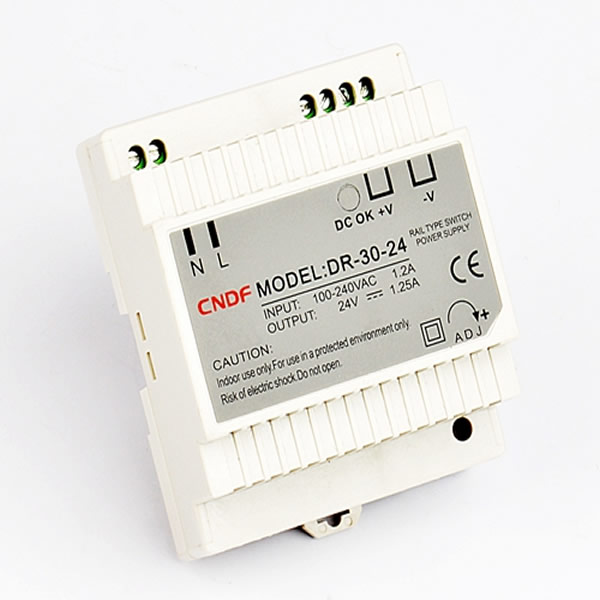
DR-30W Heavy-Duty Industrial AC Centrifugal Blower
Designed for control cabinet pressurization and industrial enclosure cooling. Features high-grade ball bearings, thermally protected AC induction motor, and rugged metal scroll housing.
Get Catalog
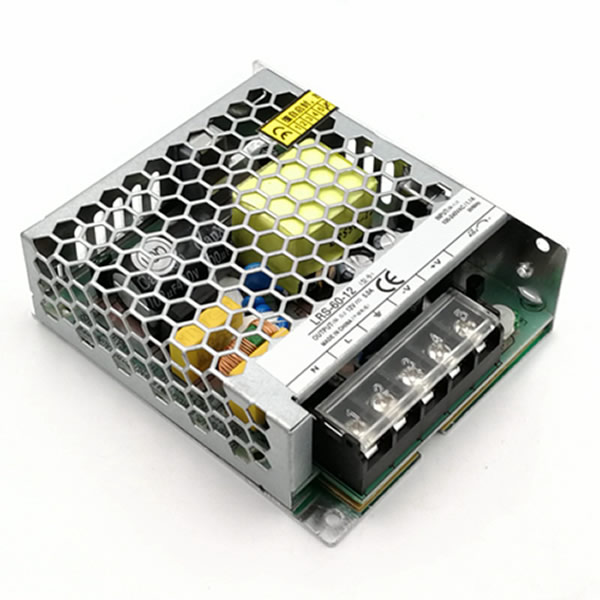
LRS-60W Ultra-Thin Forward Curved Centrifugal Module
Space-optimized AC centrifugal cooling module ideal for slim HVAC ducts, medical instrumentation, and power distribution systems requiring concentrated air vectoring.
Get Catalog
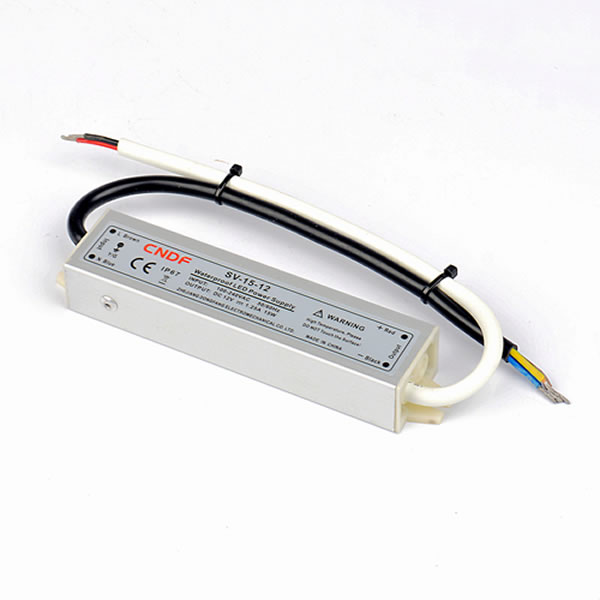
SV-15W Weatherproof IP68 Waterproof AC Centrifugal Fan
Sealed potting enclosure engineered for outdoor telecom enclosures, solar power inverters, and high-humidity marine environments with full corrosion resistance.
Get Catalog
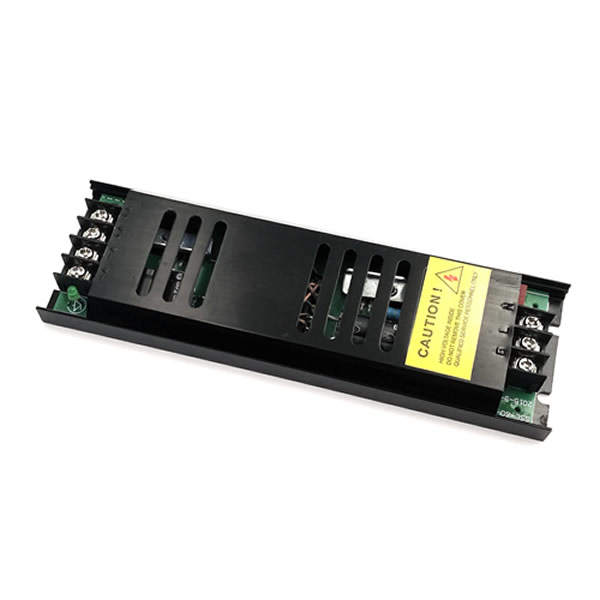
SSL-60H High-Static Backward Curved Motorized Impeller
Direct-drive AC motorized impeller delivering exceptional static pressure up to 850 Pa. Ideal for cleanroom air filtration, server racks, and heat recovery ventilators.
Get Catalog
3. Global Sourcing & Future Procurement Trends for AC Centrifugal Fans (2025–2030)
As global supply chains shift toward carbon neutrality, intelligent building management systems (BMS), and enhanced operational resilience, international procurement teams must adapt their sourcing strategies. Key macroeconomic and technical trends shape the future of AC centrifugal fan procurement:
3.1 ErP Directive Compliance and Energy Efficiency Thresholds
Regulatory bodies across Europe, North America, and East Asia have instituted stringent minimum efficiency performance standards (MEPS), such as the European Union’s ErP Directive (Ecodesign 2009/125/EC). Future-proof AC centrifugal fans must utilize optimized blade profiles, high-fill copper stator windings, and low-loss silicon steel cores to minimize electrical losses. B2B buyers must audit suppliers for certified efficiency testing reporting to avoid import tariffs or regulatory rejection at customs.
3.2 Dual-Frequency (50Hz / 60Hz) Universal Voltage Engineering
Globalization requires machinery manufacturers to standardise inventory across multi-regional markets. Modern AC centrifugal fans are increasingly engineered with dual-frequency (50/60Hz) wide-voltage stators (115V / 230V / 400V AC). This eliminates the need to maintain separate SKU inventories for North American 60Hz power grids versus European/Asian 50Hz networks, lowering warehousing overhead for OEM equipment builders by up to 25%.
3.3 Transition from AC to EC (Electronically Commutated) Hybrids & Retrofitting
While traditional AC centrifugal fans remain unmatched in upfront cost-effectiveness and raw electrical robustness, the market is witnessing a steady rise in hybrid AC-to-EC retrofit demand. Buyers require suppliers who provide drop-in mechanical replacement footprints, enabling seamless field upgrades from fixed-speed AC induction fans to variable-speed EC units without redesigning fan housings or mounting chassis.
3.4 Supply Chain Resilience & Modular OEM Sourcing
Lead-time volatility has highlighted the necessity of vertically integrated manufacturing partners. B2B buyers now prioritize suppliers with full in-house capabilities—stamping, motor winding, dynamic balancing, automated varnish dipping, and 100% full-load burn-in testing. Partnering with mature manufacturing facilities such as AWI Power Co., Ltd. mitigates third-party component bottlenecks and ensures consistent batch-to-batch repeatability.
Streamline Your Global OEM Fan & Power Sourcing
AWI Power Co., Ltd. provides customized AC centrifugal fan engineering, prototype samples, and comprehensive technical documentation tailored for your exact application environment.
Get Catalog
4. Technology Development & Engineering Innovations in Centrifugal Air Movement
The engineering landscape surrounding AC centrifugal fans is experiencing rapid evolution driven by computational fluid dynamics (CFD), aeroacoustic modeling, and advanced metallurgy:
-
3D Biomimetic Blade Design: Leading centrifugal impellers now incorporate bionic trailing-edge serrations and profiled blade tips inspired by owl wing structure. This significantly reduces vortex shedding noise and boundary layer turbulence, lowering sound pressure levels ($L_p$) by up to 3.5 dB(A) without sacrificing static pressure output.
-
Precision Two-Plane Dynamic Balancing: To extend bearing operational lifespan beyond 50,000 continuous hours ($L_{10}$ life), modern manufacturing utilizes automated dynamic balancing machines operating down to ISO 1940 Grade G2.5 precision. This prevents micro-vibrations that cause bearing raceway flaking and acoustic hum.
-
High-Temp Class H Insulation & Thermal Protection: Next-generation AC fan stators utilize Class H magnet wire rated to 180°C alongside automatic thermal overload protectors (TOP). This ensures continuous reliability during unexpected system over-pressurization or high ambient temperatures in industrial enclosures.
-
Advanced Environmental Protection Coatings: Electro-deposited black cathodic electrophoretic coating (E-coating) and epoxy powder encapsulation protect steel impellers against salt spray, chemical vapors, and industrial dust abrasion, exceeding 500-hour ASTM B117 salt spray standards.
5. Global B2B Procurement FAQ: Critical Technical & Sourcing Questions Answered
Below are expert answers to the most frequent technical, compliance, and procurement queries submitted by global buyers, engineering teams, and AI search agents regarding AC centrifugal fans:
What is the fundamental difference between an AC Centrifugal Fan and an Axial Fan?
An Axial Fan moves air parallel to its rotational axis (like a propeller), making it ideal for low-impedance systems requiring maximum volume (CFM) at near-zero backpressure. In contrast, an AC Centrifugal Fan draws air in axially and discharges it radially at a 90-degree angle. Centrifugal fans generate significantly higher static pressure, allowing them to force air through dense filters, long ductwork, tight heat exchangers, and restricted electronic enclosures where axial fans would stall.
How do I accurately calculate required CFM and Static Pressure ($P_s$) for fan selection?
Airflow volume requirement ($CFM$) is determined by thermal dissipation physics using the formula:
$$\text{CFM} = \frac{3.16 \times P_{loss} (\text{Watts})}{\Delta T (^\circ\text{F})}$$
Where $P_{loss}$ is internal heat load and $\Delta T$ is allowable temperature rise. Static pressure ($P_s$), measured in inches of water gauge (in. w.g.) or Pascals (Pa), is calculated by summing all static resistance points: air filters, inlet grilles, internal cabinet geometry, and outlet ducting losses. Always cross-reference your calculated operating point ($CFM @ P_s$) with the manufacturer’s published fan curve.
Backward Curved vs. Forward Curved: Which is superior for energy efficiency?
Backward Curved AC Centrifugal Fans offer superior aerodynamic efficiency (up to 85%) compared to forward curved designs (typically 55–65%). Backward curved impellers feature non-overloading horsepower characteristics, meaning motor power consumption levels off even if static pressure drops to zero. Forward curved fans deliver high volume in compact scroll housings but risk motor burnout if operated without sufficient system resistance.
Can AC Centrifugal Fans operate under variable speed control?
Yes. AC centrifugal fans equipped with permanent split capacitor (PSC) or shaded pole induction motors can be speed-controlled via Variable Frequency Drives (VFDs) for 3-phase models, or Phase-Cut Voltage Regulators / TRIAC controllers for single-phase models. Care must be taken to operate within non-resonant frequency bands to prevent acoustic motor hum and stator overheating at low RPMs.
How does operating ambient temperature affect the service life of an AC Centrifugal Fan?
Bearing grease degradation is the primary failure mode in elevated ambient temperatures. According to Arrhenius’ law, every 10°C rise in motor winding temperature above nominal reduces bearing grease service life by 50%. High-quality AC centrifugal fans manufactured by AWI Power Co., Ltd. utilize synthetic wide-temperature grease (-40°C to +160°C) and Class F/H motor insulation to guarantee a minimum $L_{10}$ life of 50,000 hours at 40°C ambient.
What certifications are required for importing AC Centrifugal Fans into Europe and North America?
For the European Union, CE marking is mandatory, demonstrating compliance with the Low Voltage Directive (LVD 2014/35/EU), Electromagnetic Compatibility Directive (EMC 2014/30/EU), RoHS Directive (2011/65/EU), and ErP Ecodesign regulations. For North America, UL/cUL recognition or CSA certification according to UL 507 standards is typically required by OEM machine builders for electrical safety approval.
How do sound power level ($L_{w}A$) and sound pressure ($L_{p}A$) ratings differ?
Sound Power Level ($L_{w}A$) measures total acoustic energy emitted by the fan at the source, independent of environmental surroundings. Sound Pressure Level ($L_{p}A$) measures noise at a specific distance (typically 1 meter) in an anechoic chamber. When comparing acoustic specs from different manufacturers, ensure acoustic ratings specify the exact measurement distance, voltage, frequency, and operating point on the PQ curve.
What OEM/ODM customization options are critical for HVAC and equipment integration?
Key OEM customization parameters include: custom lead wire length and connector termination (e.g., Molex, AMP, Deutsch), IP55/IP68 waterproof potting, customized mounting flanges or inlet cones, special supply voltages (e.g., 115V, 230V, 400V 3-phase, 480V), tachometer signal output (FG signal), thermal alarm sensors, and high-corrosion protective coatings.
How can system engineers prevent motor burn-out in high-resistance duct networks?
Engineers should specify AC centrifugal fans equipped with impedance-protected motors or built-in auto-reset thermal cutoffs (thermal overload switches). Furthermore, selecting backward-curved motorized impellers inherently prevents overload conditions because their power curve naturally peaks and declines under restricted airflow states.
What is the typical production lead time and MOQ for custom voltage/frequency orders at AWI Power Co., Ltd.?
Standard sample lead time at AWI Power Co., Ltd. is 5–7 business days for engineering evaluation. Full production runs typically take 2 to 3 weeks depending on quantity and customization specifications. Flexible Minimum Order Quantities (MOQ) support both initial prototyping and mass production OEM manufacturing.
6. Why Partner with AWI Power Co., Ltd. — Enterprise Manufacturing Strength
With over three decades of operational excellence since 1989, AWI Power Co., Ltd. has established itself as a global benchmark in high-reliability power systems, industrial cooling fans, and motor drive technologies. Headquartered in Yueqing Central Industrial Park, Zhejiang Province, China, our modern 19,500 m² manufacturing facility serves over 15,600 verified global clients across 30+ countries.
6.1 Vertically Integrated Quality Control Framework
Every AC centrifugal fan produced by AWI Power Co., Ltd. undergoes rigorous multi-stage quality control. From raw material inspection (stator silicon steel laminations, enamelled copper wire, precision ball bearings) to automated winding, vacuum varnish impregnation, two-plane dynamic balancing, and 100% full-load aging tests, we ensure zero-defect delivery.
6.2 ISO 9001:2015 & Global Standard Compliance
Our factory operates strictly under the ISO 9001:2015 Quality Management System. All product lines carry complete CE certificates and conform with RoHS environmental safety requirements, facilitating fast-track customs clearance and seamless compliance for global B2B procurement teams.
6.3 Comprehensive Power & Thermal Ecosystem
Beyond AC centrifugal fans, AWI Power Co., Ltd. offers a unified power & thermal management ecosystem—including DIN rail power supplies, waterproof LED drivers, switching power supplies, pure sine wave DC-AC inverters, and DC axial cooling fans. This allows system integrators to source complete power and cooling architectures from a single, trusted manufacturer.
 English
 中文
中文
 العربية
 Français
 Pусский
 Español
 Português